
Welcome to Azteca
The men's World Cup opens at Estadio Azteca, 2,240 metres above sea level. Across 6,328 prior World Cup and qualifier matches, that elevation has been the most reliable home-field advantage in football. The schedule already wrote the script.
- 2,240 m
- Estadio Azteca, 2026 opener
- +2.71
- Bolivia's home-vs-away goal swing
- 45.6%
- Bolivia home win rate in La Paz
- -1.03
- Avg visitor goal diff above 2,000 m
A team's training base is a contract with the air it breathes. Change the air, and the contract voids. Qualifying is where the schedule does the voiding.
The map plays favorites.
On 11 June 2026, the men's World Cup opens at Estadio Azteca in Mexico City. The visiting bench will spend the previous week sleeping in hotels over two kilometres higher than the ones they trained in for the last four years. Their heart rates at rest will run faster. Their max-effort sprints will lose a yard. Their recovery between high-intensity actions will stretch. None of this is theoretical, and none of it changes by kickoff.
FIFA's ranking algorithm treats every match as neutral. So does the schedule. The air does not. Across 6,328 prior World Cup and qualifier matches, the higher the venue, the rougher the trip - and the curve bends sharply at the elevations the 2026 tournament will visit.
The higher the venue, the rougher the trip.
Pool every men's FIFA World Cup match and every qualifier played at a host nation since 1990. Bucket each match by the elevation of the venue. Then look at the visitor's goal differential.
At sea level the away team concedes, on average, about 0.71 more goals than it scores. The home advantage is real but modest. Climb past 1,500 m and the gap widens. By the time the venue clears 2,000 m the visitor's deficit grows to -1.03 goals per match - 45% worse than the sea-level baseline, across 242 matches at venues like Mexico City, Quito, Bogotá, and Toluca.
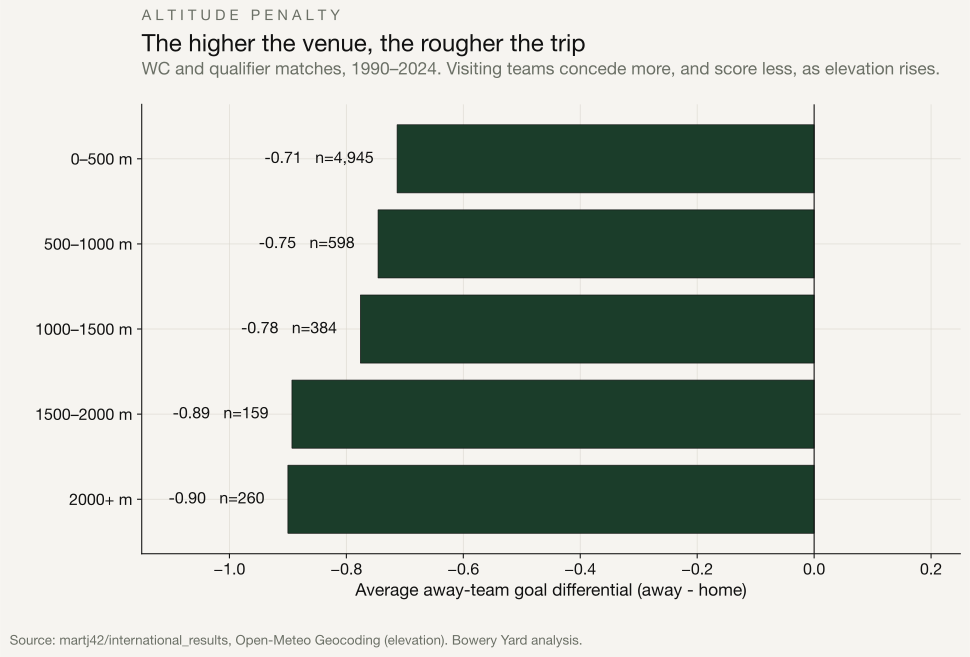
It is not a story about altitude existing somewhere on a graph. It is a step function. Most of football is played near sea level, and the home edge there is real but modest. Cross 1,500 m and the curve bends. Cross 2,000 m and the trip becomes a tactic.
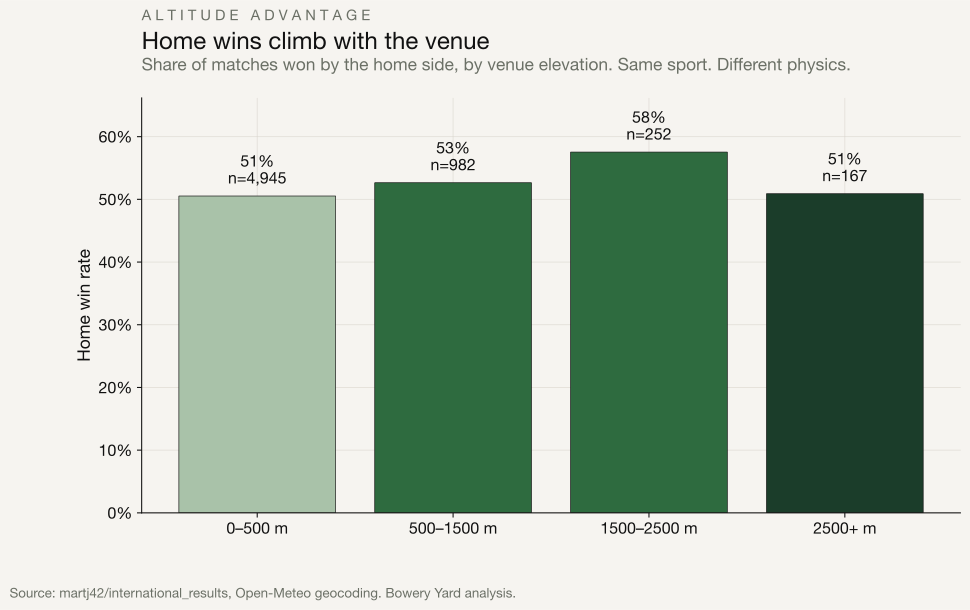
The 2,500 m+ bucket steps down from 1,500-2,500 m for an honest reason: it is almost entirely Bolivia and Ecuador hosting, and Bolivia is, on absolute talent, a bottom-third CONMEBOL side. The altitude effect is still there - Bolivia's home rate sits above the global baseline - it's just modulated by who is doing the hosting. Visitor-side metrics (Fig. 1, and the Bolivia split coming next) see through this. Win rate alone does not.
Same team. Same continent. Different sport.
Bolivia is the controlled experiment nobody set out to design.
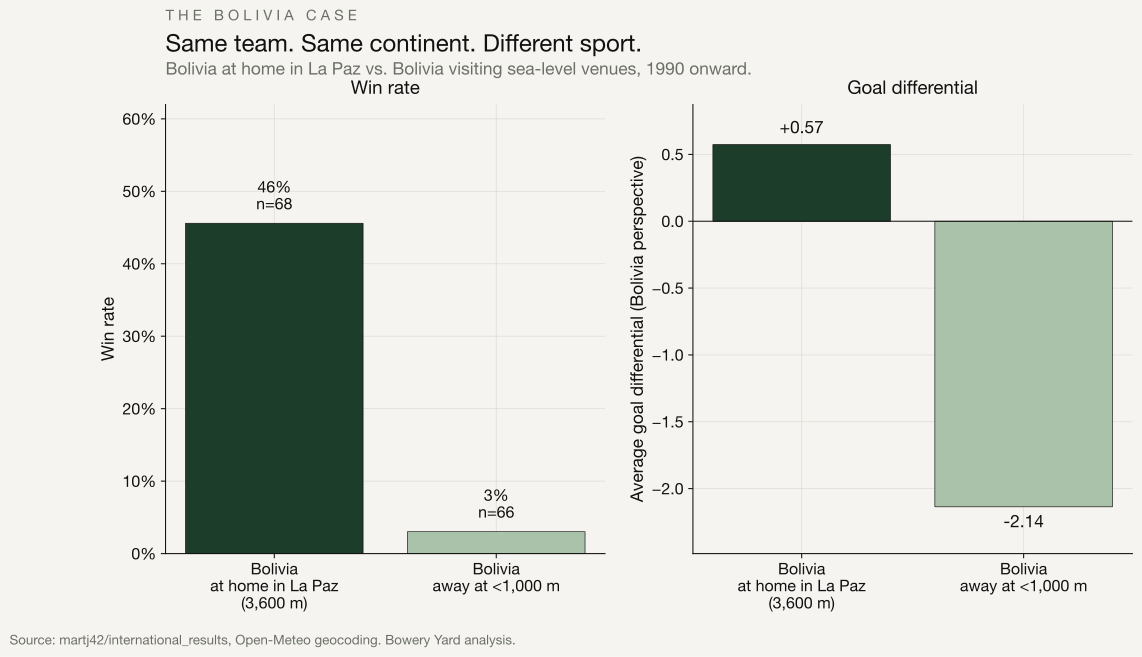
At home in La Paz since 1990, Bolivia has won 45.6% of their matches and scored +0.57 more goals than they conceded, per game. On the road at venues below 1,000 m, the same national programme wins 3% of their matches and loses by an average of 2.14 goals.
That is not a personnel gap. Bolivia plays roughly the same eleven home and away. It is a 3,600-metre gap.
In 2007 FIFA tried to ban international matches above 2,500 m, citing player health. The ban lasted seven months before pressure from Bolivia, Ecuador and Colombia rolled it back. Diego Maradona, then Argentina's manager, was among the loudest voices against it. Two years later, in April 2009, his side travelled to La Paz and lost 6-1. The broadcast showed legs being legs, and lungs being lungs.
The same physics will be on television next summer. The cameras will be pointed at a different stadium.
The standings treat every match as neutral. The air doesn't.
Ecuador runs the same play.
The Bolivia experiment has a parallel run, 1,400 km north and seven hundred metres lower. Ecuador plays its home qualifiers in Quito, at 2,850 m. The home record is a top-ten side's. The road record at sea level is a relegation candidate's.
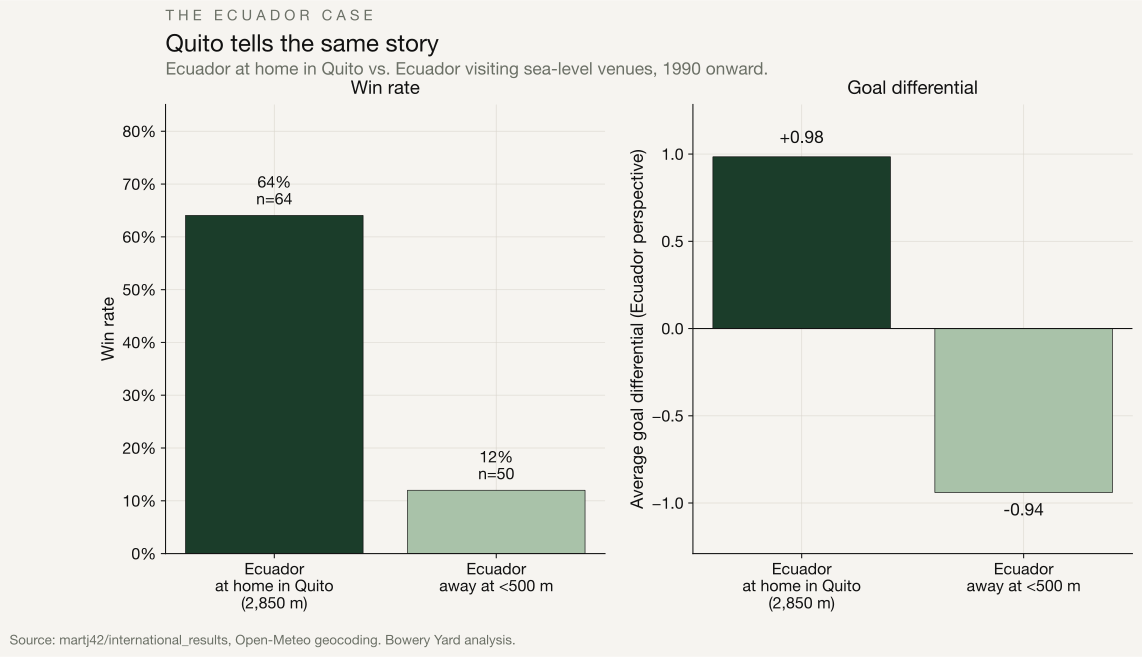
Ecuador wins 64.1% of their home qualifiers in Quito and just 12% of road matches at sea level. The goal differential flips by +1.92 goals per game from home to away. Two countries, two laboratories, the same answer.
Qualifiers are where the home advantage lives.
World Cup finals matches mostly happen at neutral, temperate, sea-level venues. The 2018 tournament was Russia in summer; 2022 was Qatar in winter on the coast; 2026 will spread across Canada, the United States, and Mexico.
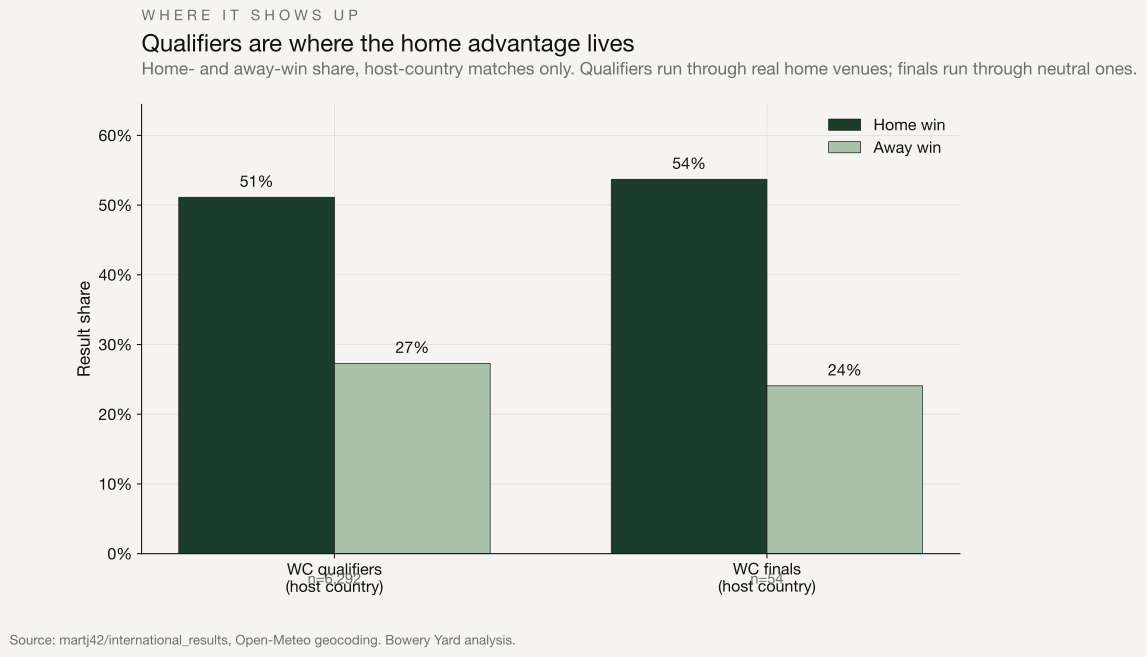
The qualification path is the opposite. CONMEBOL teams play home-and-home above 2,500 m for two-and-a-half years. CONCACAF teams play in Mexico City and San Pedro Sula. CAF teams play in Addis Ababa (2,355 m) and Nairobi (1,684 m). AFC teams play in Bishkek and Tashkent. The host wins 51% of qualifiers and 54% of finals matches - a small gap in average, but the qualifiers are 116 times the sample, and that is where the campaigns are decided. The finals number is a small, survivor-biased sample of strong hosts running deep into their own tournaments; the qualifier number is what 6,274 matches of structural home-field grind actually looks like.
Of the six altitude nations, Mexico is the only 2026 host.
Mexico plays its home qualifiers at an average elevation of 2,099 m and wins 81% of them - the strongest altitude-home record in the dataset. Six national teams in all play most of their home matches above 1,500 m. Ecuador, Kenya, Bolivia, Namibia, and Rwanda round out the list. None of these nations is objectively better at home than they are abroad in any other respect. Each one breathes objectively thinner air.
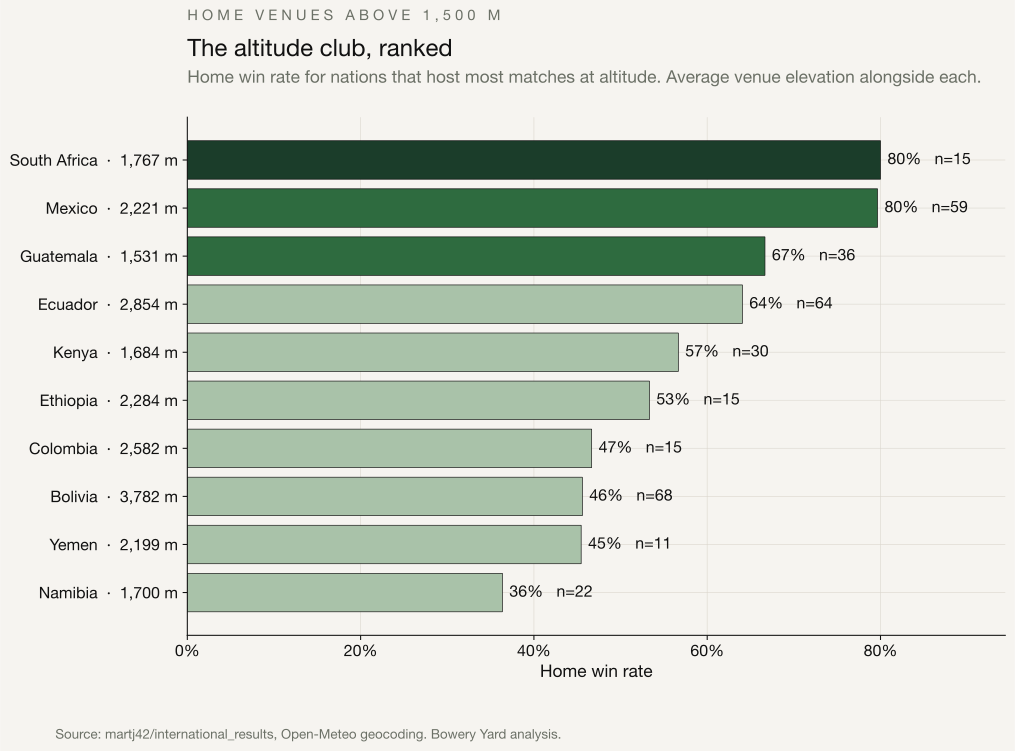
The 55-point spread inside the club tracks confederation talent more than altitude - Mexico and Ecuador play stronger CONMEBOL and CONCACAF opposition than Kenya, Namibia and Rwanda see in CAF qualifying. The consistent finding across all six is that each nation's home rate at altitude beats their away rate at sea level. The absolute levels do not collapse to a single number.
Mexico is also the only nation on that list co-hosting the 2026 men's World Cup. The next time the tournament breathes thin air, it will be at the venue where Mexico has not lost a World Cup finals match in fifty-six years.
The air at Azteca.
Mexico hosted the World Cup at Estadio Azteca in 1970 and again in 1986. They played five matches there across both tournaments. They won three and drew two. They did not lose. Across all nineteen matches at the venue over those two cups, the visiting team conceded an average of 1.26 more goals than it scored - more than double the visitor deficit at the lower-elevation Mexican venues used in the same tournaments. The 1970 semifinal between Italy and West Germany - the one nicknamed the “Game of the Century” - went to extra time at Azteca, with both teams cramping by the 95th minute. The 1986 quarterfinal where Maradona's Argentina eliminated England also happened there, with the famous noon kickoff in the same thin air.
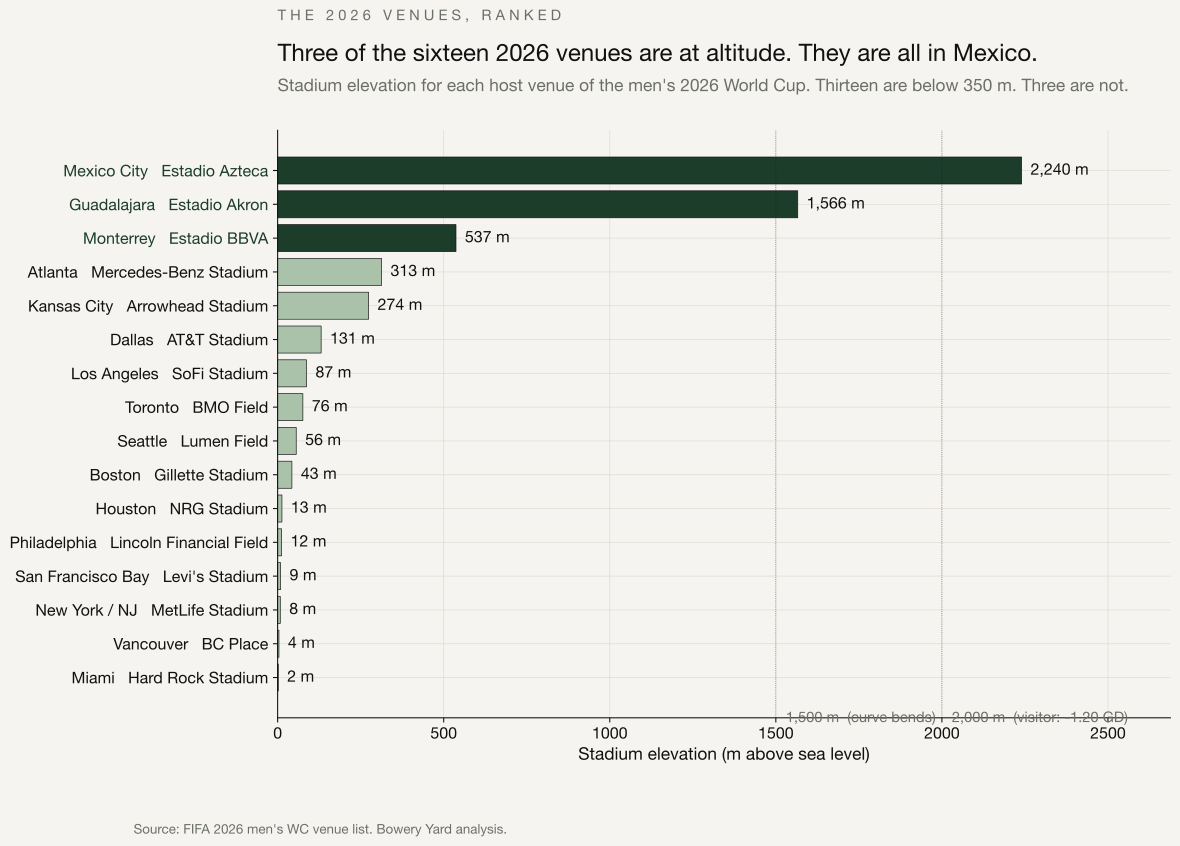
The 2026 tournament will spread across sixteen host cities. Thirteen of them sit below 350 m above sea level. Three are in Mexico - and only one, Monterrey at 537 m, sits anywhere close to the rest of the venue list. Guadalajara and Mexico City are above the line where the data already says the visitor pays. FIFA's ranking algorithm publishes a single integer per team and treats every match as neutral. The schedule chose otherwise.
The visiting bench knows. The travelling staff will bring hyperbaric tents and acclimatisation windows. Even with multi-week altitude camps, the physiology literature is consistent that adaptation is partial - resting heart rate and VO2 max move toward baseline, repeated-sprint recovery does not fully close. The 2026 group stage is not a multi-week qualifier grind through La Paz; it is a single-fixture shock in a tournament where one match can decide the group. The margins are thin enough that any dent in recovery between sprints is the whole game. The schedule keeps picking the venues, and the venues keep picking the side.