
Nobody Kicks Tenth
The penalty shootout sells itself on the fifth-round hero and the looming threat of sudden death. The record says almost none of that happens. Across every men's World Cup shootout since 1982, three in five are settled before the tenth kicker is ever needed.
- 60%
- Penalty shootouts decided before kicker #10
- 29%
- End before the fifth kicker is needed
- 32 yrs
- Sudden-death drought that 2026 broke
- 64%
- Round-4 conversion, the real low point
The tenth kicker is a character the shootout mostly doesn't use. Every myth about the ending - the fifth-round hero, the looming threat of sudden death - arrives, the record says, after the shootout is already over.
Most shootouts are over before the tenth penalty
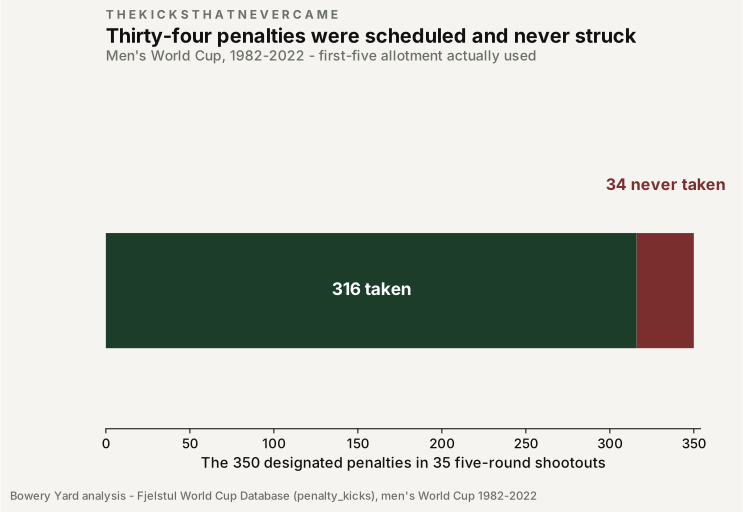
There have been 35 penalty shootouts at the men's World Cup, from West Germany and France in 1982 to Argentina and France in the Qatar final. We rebuilt every one of them kick by kick from the Fjelstul World Cup Database, which records each of the 320 penalties actually taken, in order, with whether it was scored - 316 struck within the first five rounds, and four more in the sudden-death rounds of 1982 and 1994.
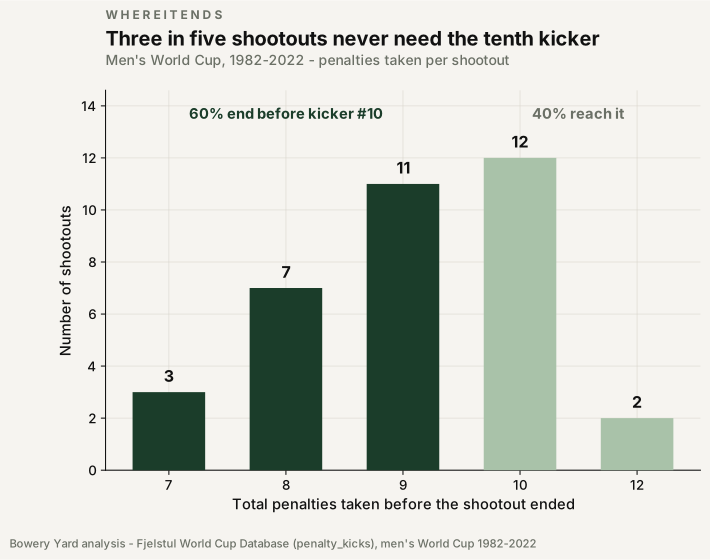
Count the kicks that were struck and a pattern falls out immediately. In 21 of the 35 shootouts - 60% - the result was mathematically settled before the tenth penalty was needed. The tenth kicker, the one every broadcast treats as the shootout's destination, walked to the spot in only 40% of them. More often, a teammate had already ended it, and the tenth kicker never kicked.
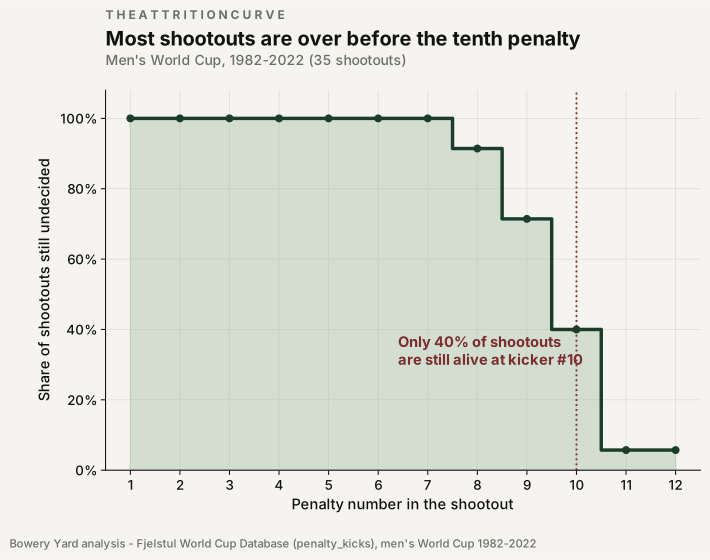
Three in five never reach the tenth kicker
The number that shapes how a manager builds an order - who takes the pressure fifth, who anchors - assumes the shootout goes the distance. The data says plan for a race that usually ends early. The most common ending is not the dramatic tenth kick at all: it is the shootout decided on the ninth penalty (11 of 35) or the eighth (7 of 35).
Only 12 of 35 shootouts went the full ten kicks of the first five rounds, and two more pushed past it into extra kicks. Everything to the left of the tenth kicker is where the World Cup actually lives.
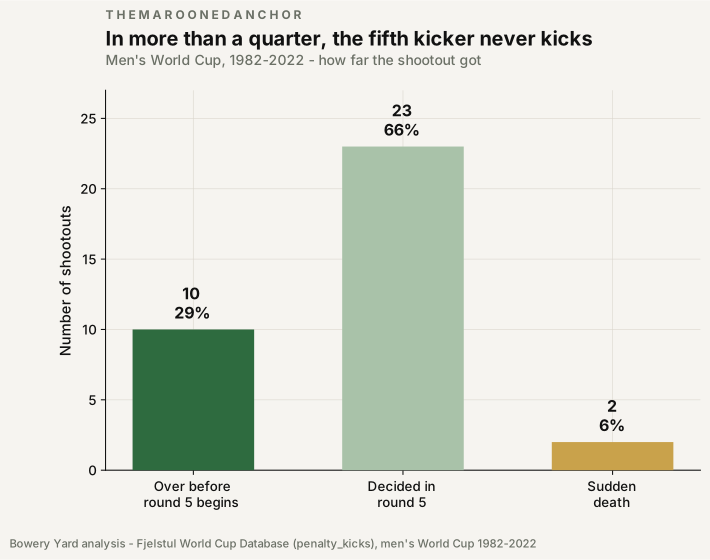
In more than a quarter, the fifth kicker never kicks
The most agonized-over decision in a shootout is the fifth kicker - the anchor, the name a manager saves for the moment the whole tournament might rest on. The record says that moment frequently never arrives. In 10 of the 35 shootouts - 29% - the result was settled before the fifth round even began. Neither side's designated fifth kicker was called.
The most famous version of this is not a World Cup game at all. At Euro 2012, Portugal saved Cristiano Ronaldo for the fifth kick against Spain. The shootout was over before Portugal's fifth kicker was needed, and Ronaldo, the best taker on the field by reputation, never took his penalty. Put your best taker fifth and you are betting the shootout lasts long enough to use him. More than a quarter of the time at the World Cup, that bet loses first.
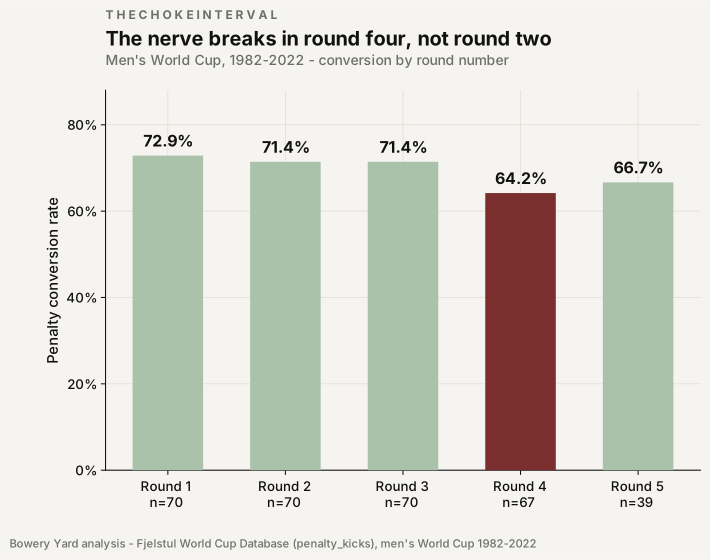
The nerve breaks in round four, not round two
There is a tidy story that penalty conversion falls off a cliff in the middle rounds, once the adrenaline of the first kick fades and panic sets in. The World Cup data does not tell that story. The first three rounds are almost identical - 72.9%, 71.4%, 71.4%. The drop is real, but it comes later, and it is sharpest in round four, where conversion falls to 64.2%, the lowest of any round. Round five ticks back up to 66.7%, because by then many of the weaker takers have already been used or spared.
Overall, World Cup shootout penalties are converted at 69.4%. The pressure is real. It just does not land where the folklore puts it.
Put your best taker fifth and you are betting the shootout lasts long enough to use him. More than a quarter of the time, that bet loses first.
Sudden death is the state everyone talks about and no one reaches
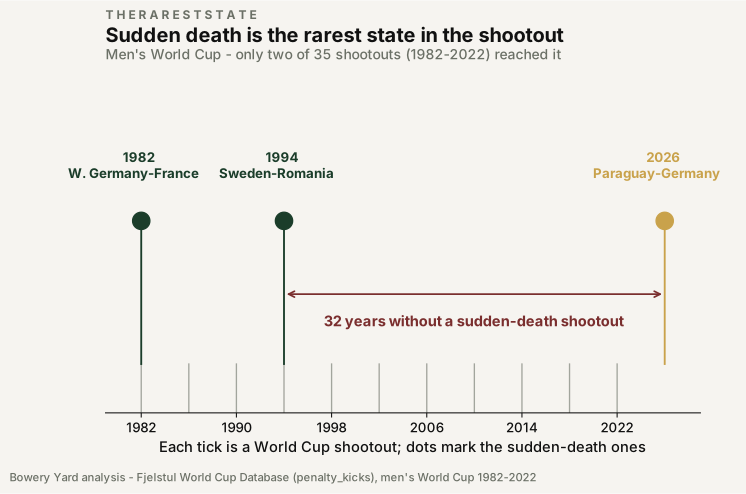
Every shootout broadcast eventually invokes it: the looming threat of sudden death, the round where one miss ends everything. In 40 years of World Cup shootouts, it has almost never happened. Of the 35 shootouts from 1982 to 2022, exactly two survived to sudden death - West Germany over France in the 1982 semi-final, and Sweden over Romania in the 1994 quarter-final. Both finished 5-4 after the sixth round.
Then the drought ran. For 32 years - eight tournaments - no men's World Cup shootout reached sudden death, until Paraguay and Germany went level through five rounds in the 2026 Round of 32 and Paraguay won it in extra kicks, the first sudden-death shootout at a World Cup since 1994. The commentary had been promising that ending for three decades. It arrived roughly once a generation.
The year of the shootout was also the year that proved the rule
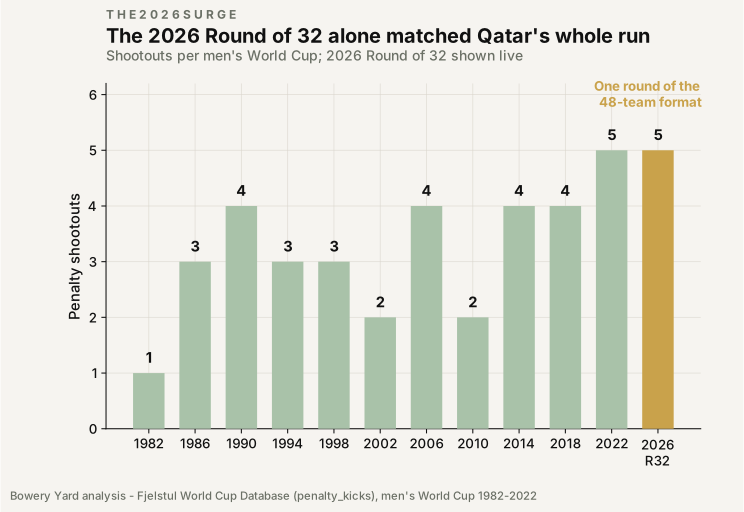
The 2026 tournament, still in progress as of July 2026, produced five penalty shootouts in the Round of 32 alone - as many as all of Qatar 2022 across the whole tournament. The expanded 48-team format added a knockout round; more knockout matches produced more shootouts. But the ending pattern held: one of the five reached sudden death, exactly as the long record predicts. The surge changed how often shootouts happen. It did not change how they end.
The lottery is shorter than the legend
We set out to time the shootout - to find the round where it breaks. The honest finding is that it usually breaks early, and quietly, on a kick nobody wrote a story about.
The anchor kicker is a plan that more than a quarter of the time never runs. Sudden death is a threat that materializes about once a generation. What actually decides most World Cup shootouts is an ordinary miss in round three or four, by a taker whose name the highlight reel forgets - and the 34 penalties, carefully assigned and rehearsed, that the result made unnecessary and no one ever struck.
The conventional wisdom - save your best taker for the fifth kick - assumes the shootout reaches him. It usually doesn't. Managers spend weeks deciding who kicks fifth. The record says they should spend more time deciding who kicks fourth.