
Left of Centre
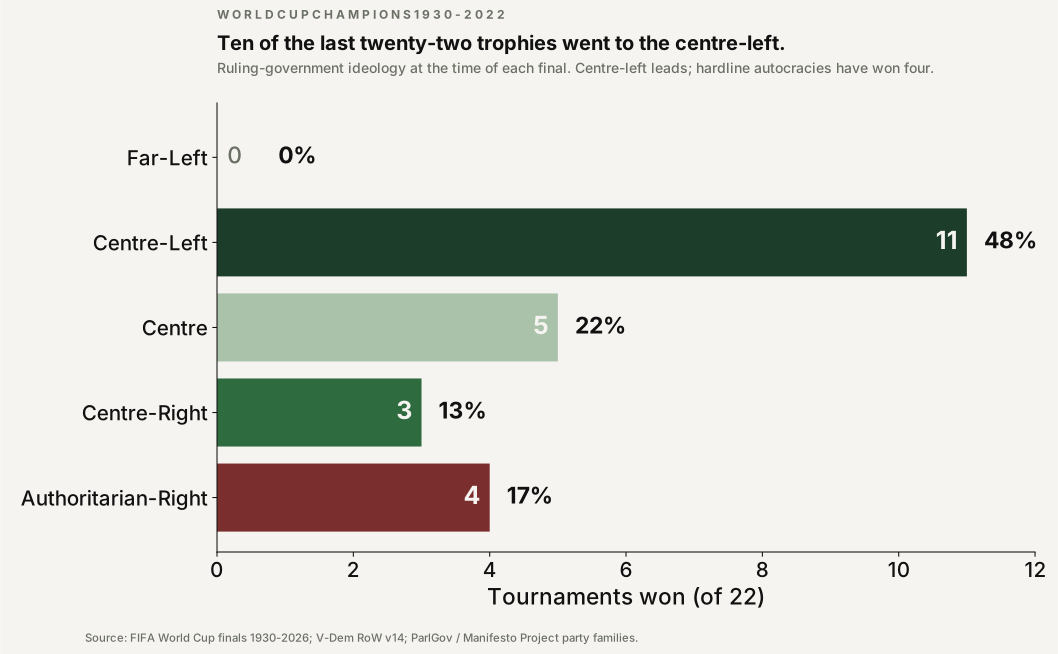
The political spectrum of every World Cup winner from 1930 to 2026. Twenty-three finals, lifted by twenty-three governments. Eleven of them were centre-left. Four were hardline autocracies. None were of the far-left.
- 11 of 23
- Centre-left champions since 1930
- 4
- Authoritarian-right titles
- 0
- Far-left titles ever won
- 1998-2010
- Longest single-ideology streak
A World Cup final is a two-hour photograph of a country. The player on the shirt is one part of it. The government that gets to lift the trophy alongside them is another. We put every trophy from 1930 through 2026 next to its ruling regime and drew a spectrum.
The centre-left has lifted the trophy more often than any other bucket.
Twenty-three men's World Cup finals have been played between 1930 and 2026. We classified the ruling government of each winning nation at the date of the final on a five-point spectrum, from far-left to authoritarian-right, using V-Dem's Regimes of the World for the democracy-autocracy axis and ParlGov and Manifesto Project party families for the left-right axis on the democracies. Coalition governments are attributed to the largest partner at the time the whistle blew.
Eleven of the twenty-three winners were governed by a centre-left party or coalition. Five sat at the centre. Three were governed by a centre-right party. Four were authoritarian-right regimes. Zero were of the far-left. The bar bet - that the trophy goes to whichever side invests hardest, whether that's a socialist youth academy or a state-driven authoritarian pressure cooker - has a clear first read in the data.
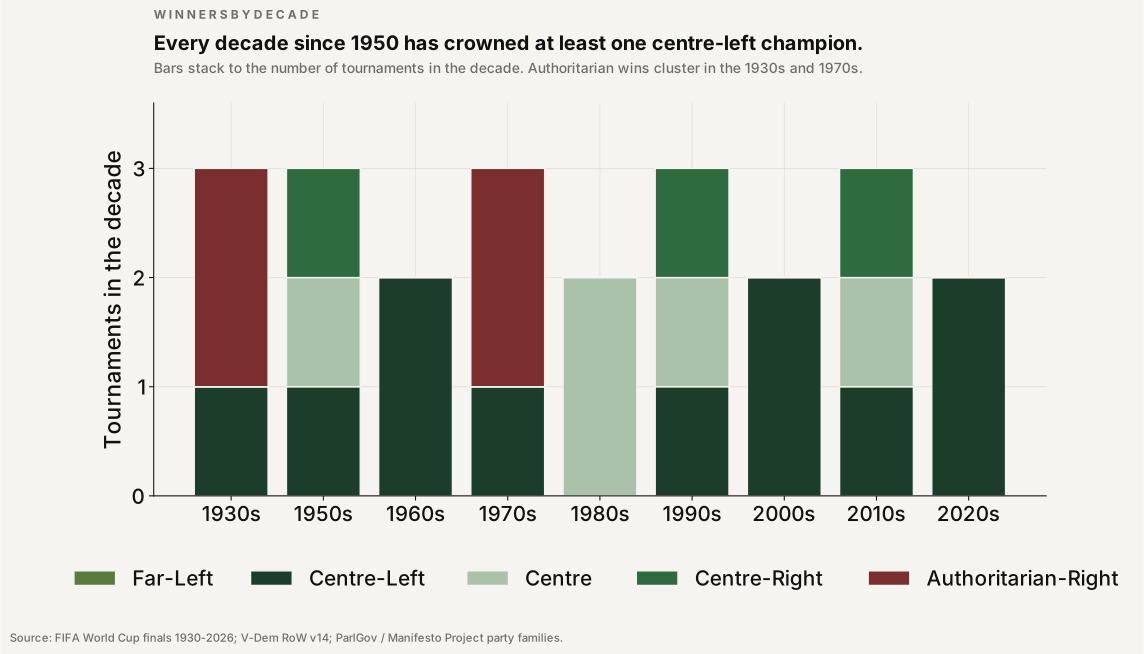
Every decade but the 1980s has crowned a centre-left champion.
The centre-left dominance is not a one-era artifact. Uruguay lifted the first trophy in 1930 under a Colorado batllist government - a proto-social-democratic party that codified an eight-hour day two decades before Britain did. Uruguay lifted it again in 1950 under Luis Batlle Berres, of the same party wing. Wilson's Labour majority took it in 1966. Schmidt's SPD took it in 1974. Jospin's gauche plurielle took it in 1998. Cardoso, Prodi, and Zapatero followed at three consecutive tournaments. Fernandez and Sanchez have carried the pattern into the 2020s at Qatar 2022 and USA/Canada/Mexico 2026.
Every decade in the record except the 1980s has a centre-left champion in it. The two 1980s finals - Italy 1982 under Spadolini's pentapartito and Argentina 1986 under Alfonsin's UCR - both fell to broad centrist coalitions rather than to a social-democratic party. Authoritarian wins are concentrated in the 1930s (Italy twice) and the 1970s (Brazil, Argentina) - decades that read as outliers not by rule.
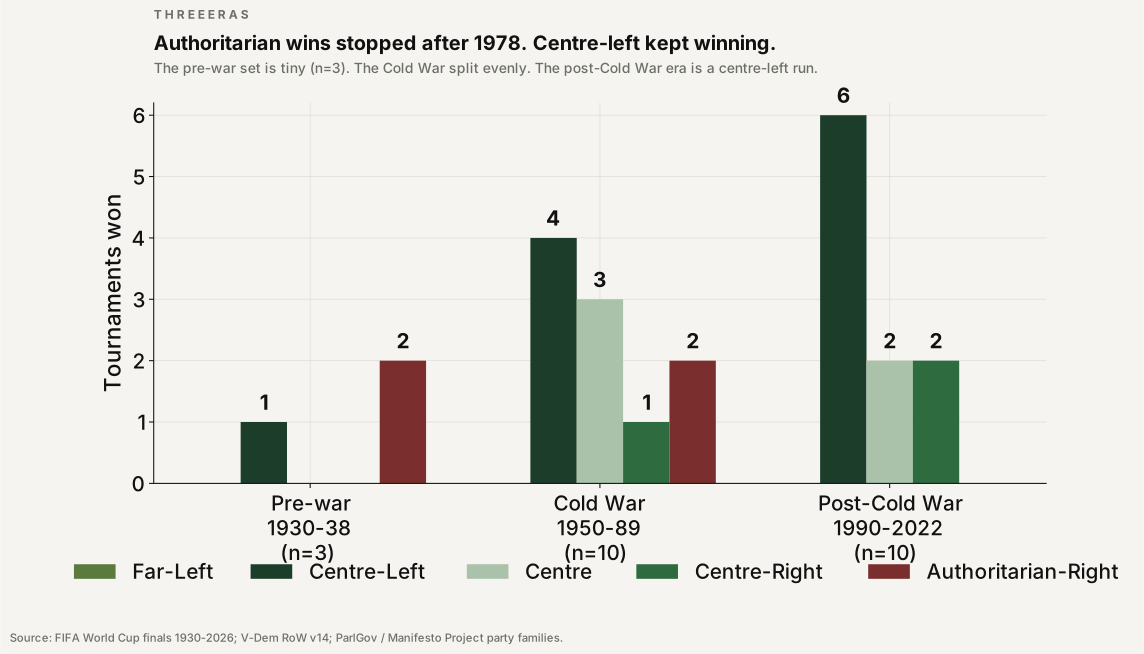
The pre-war set was authoritarian. The Cold War split. The post-Cold War era is a centre-left run.
Slicing the record into three geopolitical eras sharpens the picture. The three pre-war finals produced one centre-left champion (Uruguay 1930) and two authoritarian ones (Italy 1934 and 1938). The ten Cold War finals from 1950 to 1989 split more evenly: four centre-left, three centre, two authoritarian, one centre-right.
The ten post-Cold War tournaments from 1990 to 2026 are where the pattern hardens. Six of the ten went to centre-left governments. Two went to centre-right. Two to the centre. Zero to authoritarians. No authoritarian regime has lifted the trophy since Argentina 1978. The centre-left share of the post-Cold War era is sixty percent - a share it has never held before.
Zero far-left titles. Four hardline-right titles. Eleven centre-left titles. The spectrum tilts.
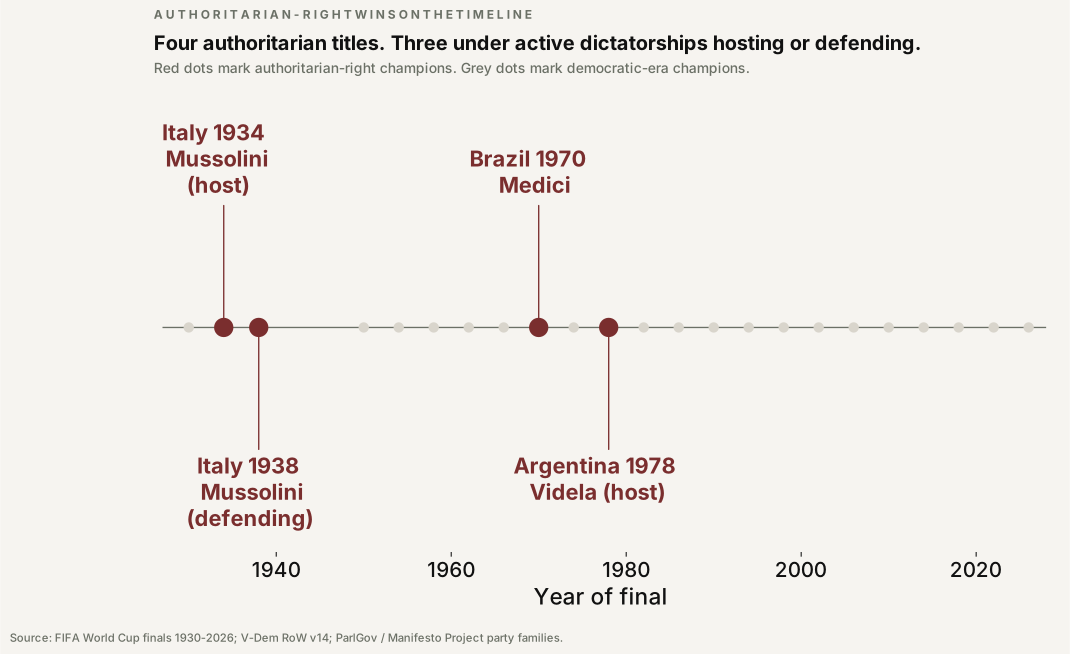
Three of the four hardline-right titles were won as host or as defending champion.
The four authoritarian titles do not sit at random points on the calendar. Italy 1934 was hosted by Italy; Mussolini's regime built the tournament as a propaganda vehicle, redesigned kits in the Fascist black, and worked the referee assignments in a way FIFA later disowned. Italy 1938 was the defending champion, the only back-to-back winner of the whole record other than Brazil 1962. Argentina 1978 was hosted by Videla's junta, at the exact peak of the disappearances. Only Brazil 1970 was won on neutral ground - in Mexico, by a Selecao whose military regime back home was in its most repressive phase under AI-5.
The pattern is not a coincidence of the sample size. Half of the authoritarian titles were won at tournaments the ruling regime itself hosted - a rate roughly double the overall home-soil rate of twenty-six percent. And no authoritarian regime has lifted the trophy since the sport globalized: forty-eight years without a hardline-right champion, across twelve consecutive tournaments.
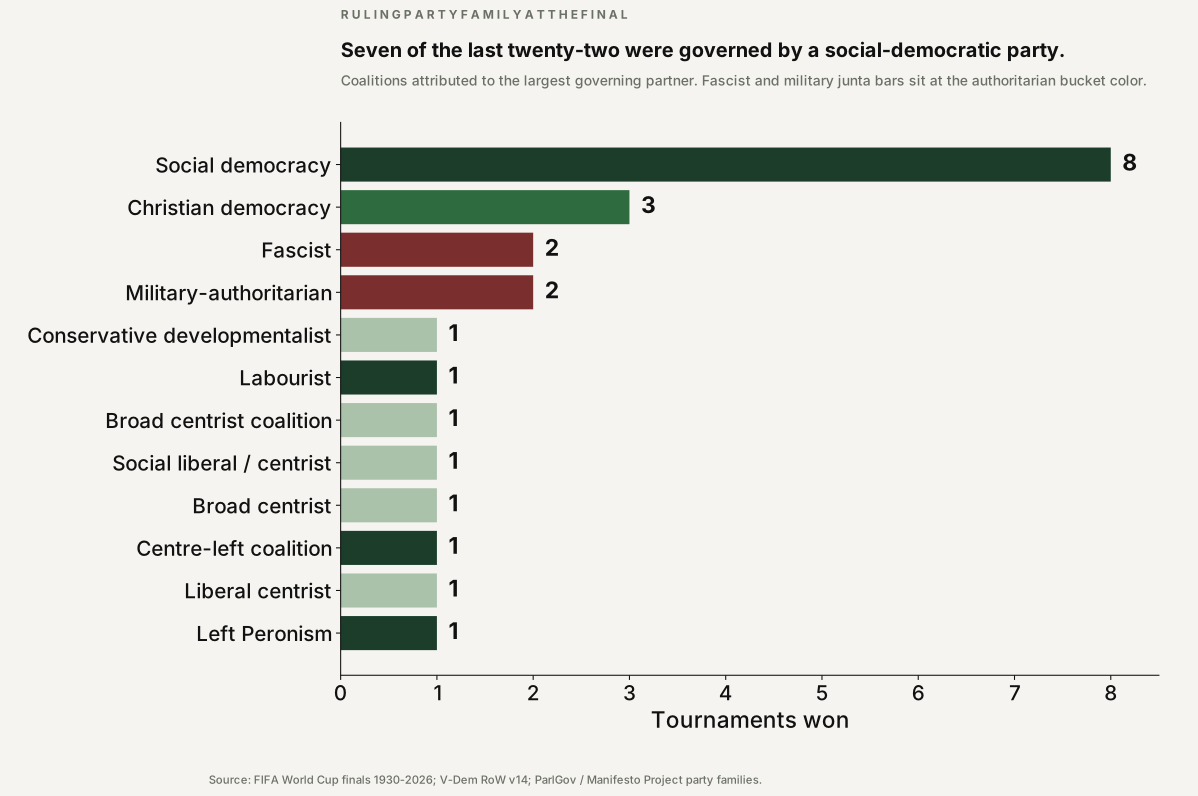
Eight of the twenty-three were governed by a social-democratic party.
The five-point spectrum aggregates. The party-family cut disaggregates. Eight of the twenty-three governing parties at the final were members of the social-democratic party family - Uruguay's Colorado batllists twice, Britain's Labour, Germany's SPD, France's PS, Brazil's PSDB, and Spain's PSOE twice (Zapatero in 2010 and Sanchez in 2026). Christian democracy is next, with three trophies for the German CDU under Adenauer, Kohl, and Merkel. The two fascist and two military-authoritarian titles are the only rows sitting on the authoritarian-right color.
The list is heavy with what political scientists call the “post-war consensus” parties: parties that competed on managing rather than dismantling a mixed-economy welfare state. Whether the mechanism is national investment in youth-football infrastructure, or something more like coincidence with the countries good at football happening to elect these parties, is a question the ideology column cannot answer.
Home soil helps everyone. It helps authoritarian hosts most.
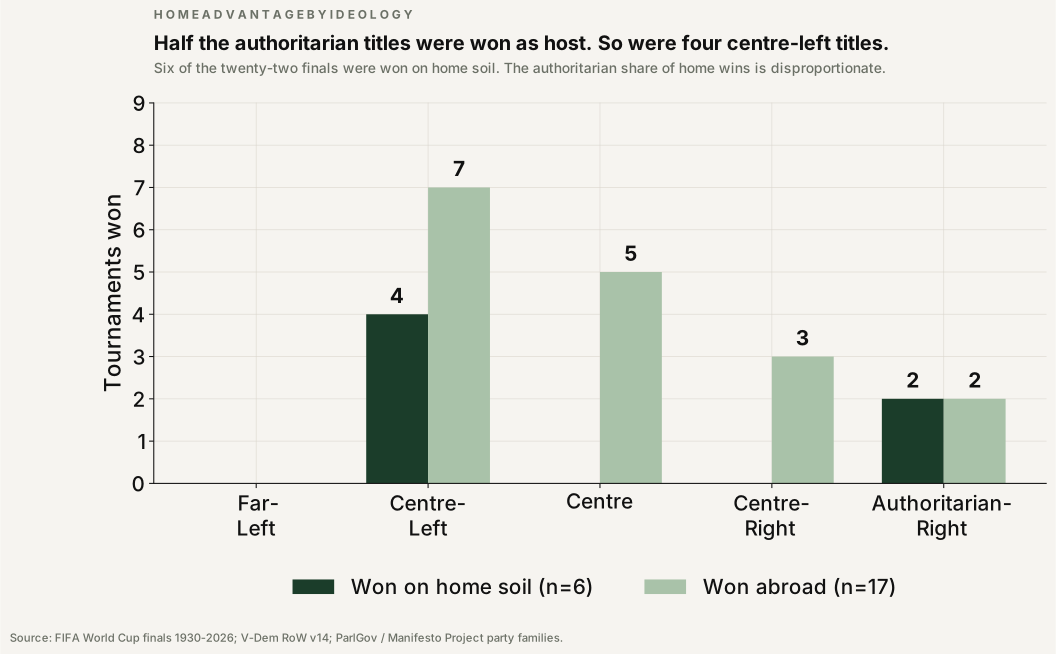
Six of the twenty-three champions won on home soil. Uruguay 1930, Italy 1934, England 1966, West Germany 1974, Argentina 1978, and France 1998. Four of them are centre-left. Two are authoritarian-right. The centre-right and centre buckets have never won a World Cup as host. Spain 2026 lifted the trophy at the USA/Canada/Mexico tournament, not at home.
The read is not that hosting flips the ideology. Every ruling party bids for its own tournament, and the pool of possible authoritarian hosts across the record is small. The read is that half of every authoritarian-right title on file was won at a tournament that regime organized. Half of every centre-left title was not - seven of the eleven centre-left champions won on foreign soil. If the authoritarian column has any home in the record, it is a home the regime built.
The distribution tilts. Whether the tilt tells you anything is a separate question.
This is the point in a piece like this where a stronger claim wants to be made. That national investment in socialized football pipelines outperforms both the free market and the authoritarian pressure cooker. That the four-consecutive-title centre-left streak from 1998 to 2010 is the visible edge of a deeper structural fact. We are not going to write that line, at least not on twenty-three data points.
What the record does say is narrower and more useful. Across the entire history of the men's World Cup, no far-left, communist, or Marxist-Leninist government has ever seen its national team lift the trophy. Four authoritarian-right regimes have, three of them on the home soil the regime itself served up. Eleven centre-left governments have, spread across seven decades and four continents. And since 1978, the authoritarian column has been closed.
The trophy is not a political scientist. But it is, over ninety years, a suggestive photograph of the kinds of countries that keep showing up in the last frame.