
The Plastic Era
Survivor permanently shortened to 26 days in Season 41. The fan complaint about the New Era is that it traded the social game for chaos. At tribal council, the data goes the other way. Where the chaos went is into the prop box.
- +136%
- Advantages per boot, New Era vs Classic
- -5.3 pp
- Drop in blindside rate after Season 41
- 26 days
- New season length, down from 39
- 3x
- Boots leaving with an unplayed advantage
We pulled every recorded vote across fifty US seasons of Survivor and asked a simple question. Did shortening the show to 26 days actually make tribal council more chaotic, or did fans confuse the trinket budget for the game itself?
The complaint about the New Era is that it broke the game.
Survivor ran 39 days a season from its 2000 debut through Season 40 in 2020. Starting with Season 41 in fall 2021, CBS cut every season to 26 days and has kept the new length ever since. The stated reason was a tighter shoot. The fan reading is that thirteen fewer days means thirteen fewer days of social bonding, and that the result is a faster, less considered, more chaotic game.
The cleanest version of the chaos claim is that blindsides went up. A blindside, in fan usage, is the move where the alliance secretly flips the target and the boot writes the wrong name - walking to tribal expecting to vote out Alice, then watching their own torch get snuffed. To measure it we used the doehm/survivoR archive, which records every vote ever cast on the US show. We define a blindside as a boot whose own vote landed on the runner-up vote-getter at that tribal - the decoy target the alliance pretended to be voting for.
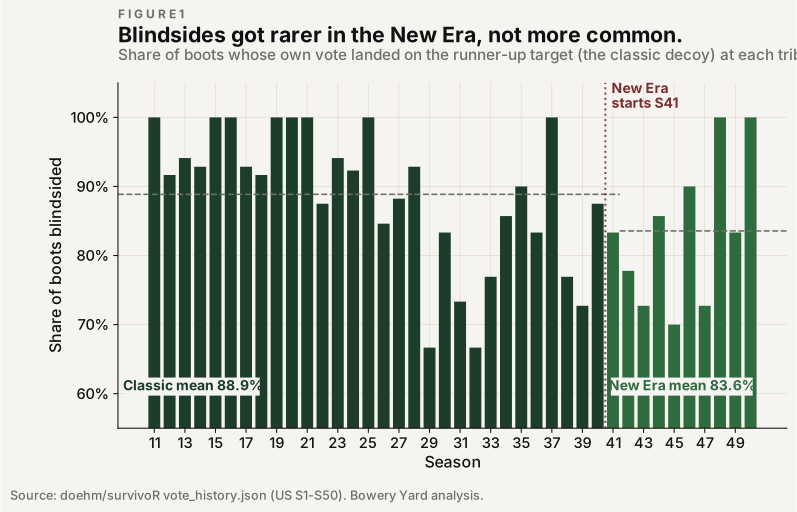
Blindsides got slightly rarer, not more common.
Across the 407 voted-out players in the idol-era Classic baseline (Seasons 11 through 40, after hidden immunity idols entered the game), 88.9 percent walked to tribal having written the wrong name. Across the 102 boots of the New Era (Seasons 41 through 50), the rate is 83.6 percent. The textbook blindside is 5.3 percentage points less common in the 26-day game, not more.
The shape of the disagreement matters. If the New Era had broken the social game, we would expect the boot to have less information going into the vote, not more - and the wrong-name rate to climb. It did not. Read narrowly, players in the New Era are slightly better at reading the room than their Classic counterparts.
Eliminations land with more weight behind them, not less.
The other place chaos should show is in the vote margin - the count between the player going home and the runner-up target. A chaotic tribal looks like 4-3, with two factions barely agreeing on who to send. A coordinated tribal looks like 6-1.
The New Era shifted toward the coordinated end of the distribution. Close tribals decided by a single vote dropped from 20.4 percent of Classic eliminations to 12.7 percent of New Era ones. The mean season margin moved from 3.09 votes to 3.17. Players arrive at tribal council with a clearer read on the math than they used to.
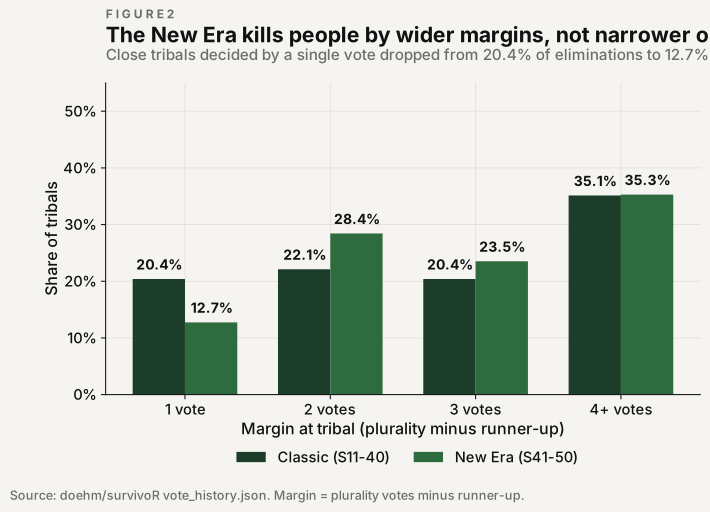
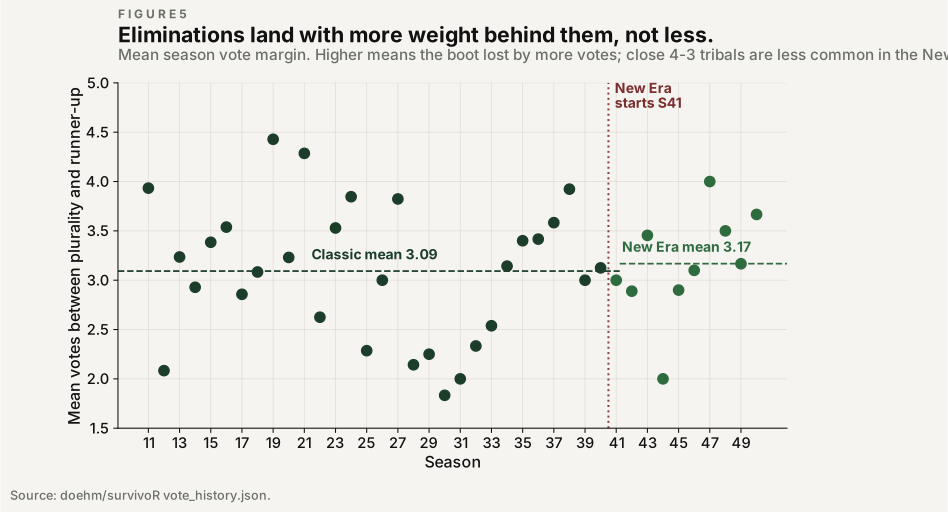
The complaint was that the 26-day game forced faster betrayal. The data says the cast caught on quicker and bused with fewer dissenters.
One advantage entering the game for every boot leaving it.
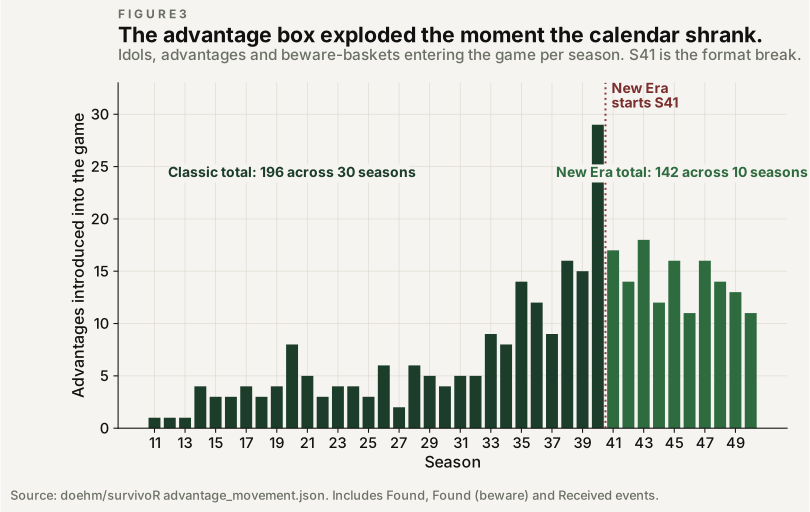
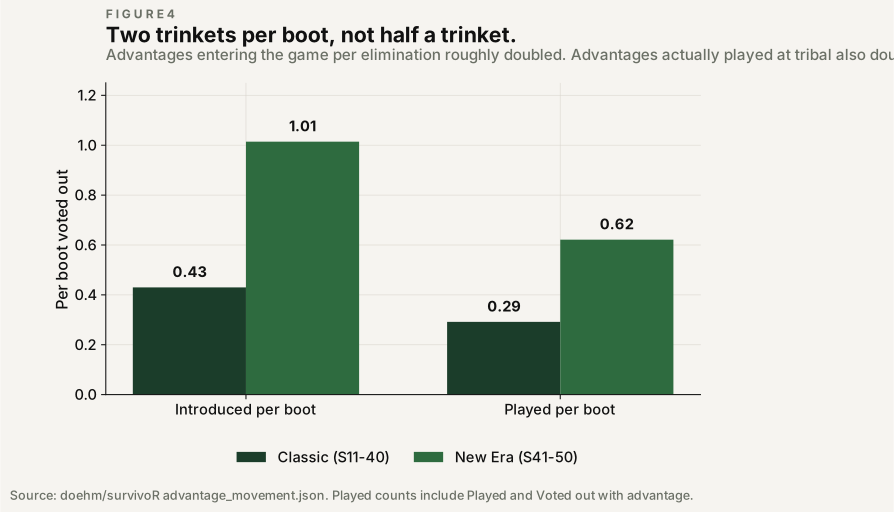
What did change is the prop box. Across the 30 idol-era Classic seasons, production introduced 196 advantages, idols, and beware-baskets in total - 6.5 per season, 0.43 per elimination. Across the 10 New Era seasons, production has introduced 142, or 14.2 per season. On a per-boot basis the rate jumped from 0.43 to 1.01 - one advantage entering the game for every player voted out.
Advantages actually played at tribal moved the same way, from 0.29 per boot to 0.62. Twice as many idol plays, beware-basket redemptions, extra-vote drops, and shot-in-the-dark cards hitting the mat per elimination. The thing that doubled is not the betrayal. It is the plastic.
Production handed the cast more plastic than the cast can play.
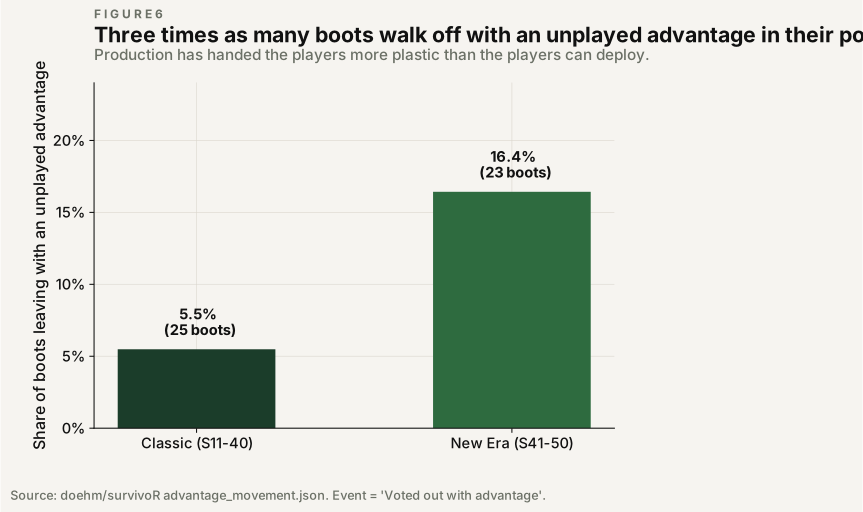
One way to know the advantage box is overstuffed is to count the boots walking off the island with an unplayed item in their pocket. In the idol-era Classic baseline, 25 boots out of 456 - 5.5 percent - left the game with an advantage they never played. In ten New Era seasons, 23 boots out of 140 - 16.4 percent - have done the same. Three times the rate, in a third the seasons.
Some of that is bad play. Most of it is supply. When the show adds advantages faster than the strategy layer can absorb them, the surplus walks off in someone's back pocket. Production is producing the chaos and the cast is, on net, metabolizing it slower than it arrives.
More plastic does not buy more blindsides.
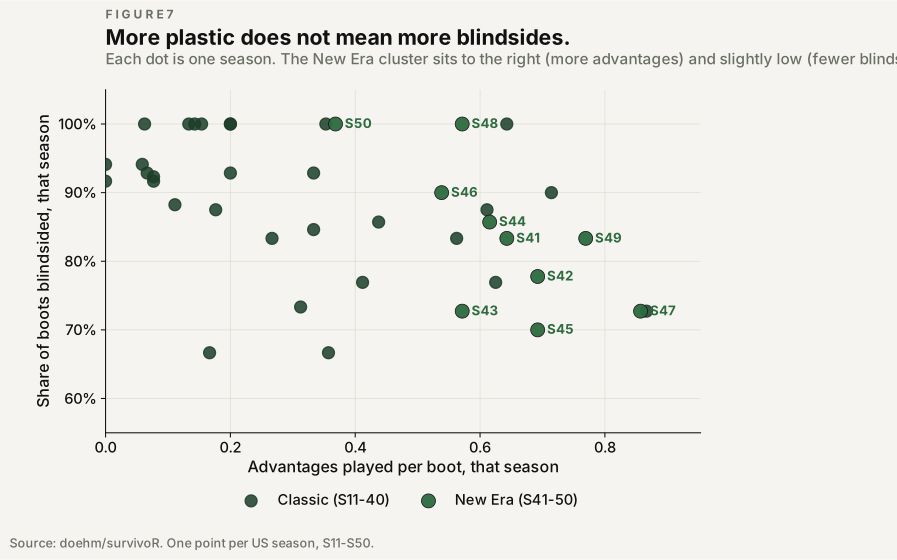
One more check before the outro. If the advantage boom were really driving the chaos the fans report, we would expect the seasons with the most advantages played to also be the seasons with the most blindsides. They are not. Plotting advantages played per boot against blindside rate, one point per season, gives a scatter with no slope to it.
The New Era cluster sits to the right of the Classic cluster - more advantages played, as expected - and slightly below it on the y-axis. The two are independent. The prop economy and the betrayal economy are not the same economy.
The chaos was real. The fans were pointing at the wrong shelf.
The complaint about the New Era is not nothing. Watching is different now. There are more idols on more necks, more advantages on more journeys, more rituals at every tribal, more cards turning over before any name gets written. The screen is louder. That part is true.
The argument that this louder screen translates to a more chaotic vote is what the record refuses to support. The actual vote, at the moment a torch gets snuffed, is slightly more coordinated than it used to be, with a higher rate of on-script kills and a lower rate of one-vote escapes. The plastic is the loud part. The strategy is the quiet part. The two have decoupled.
What that says about the next five seasons depends on which half you trust. If you trust the screen, expect more advantages, more wrinkles, more produced moments. If you trust the vote tallies, expect cleaner kills and fewer surprises at the urn. The same dataset supports both reads, because the show is doing both things at once.