
The Oval: England's Best Chasing Ground
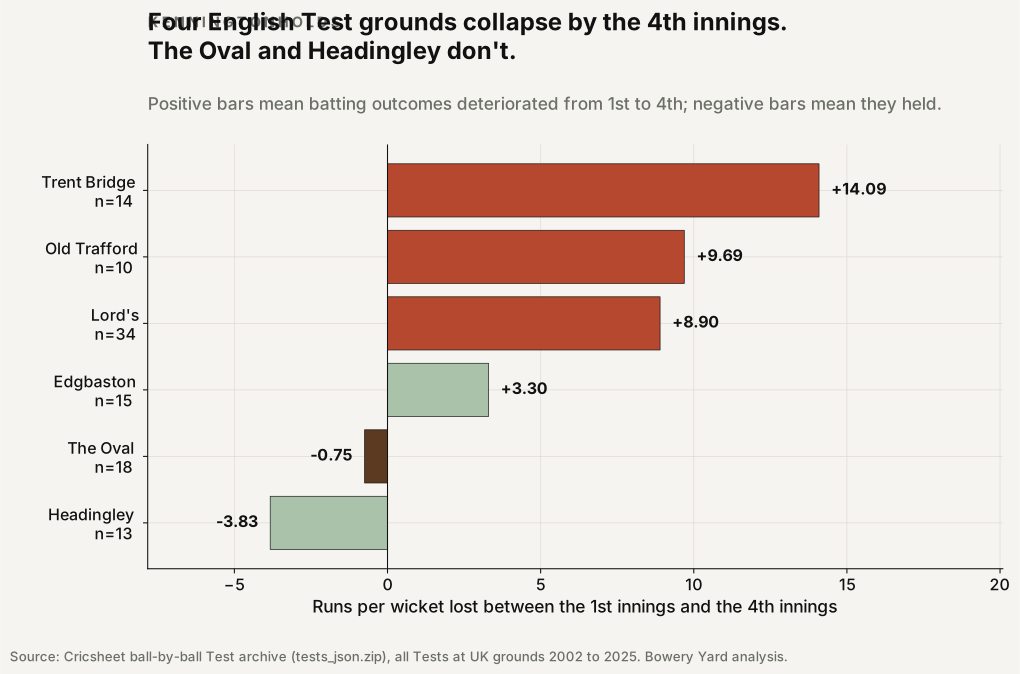
At England's seven Test grounds since 2002, batting averages collapse from the 1st innings to the 4th by as much as 14 runs per wicket. At The Oval, they go up. The toss math at Kennington is not the same problem as at Lord's.
- +0.75
- Oval 4th-inn avg above its 1st
- 36.03
- Oval 4th-innings batting avg, top of England
- +14.09
- Trent Bridge 1st-to-4th collapse
- #1 of 6
- Oval rank for 4th-inn batting
The folk wisdom of Test cricket says the pitch breaks down. The Cricsheet record says that depends entirely on which pitch you mean.
The Oval is the only major English Test ground that finishes higher than it starts.
Across every Test played at one of England's seven Test grounds since 2002 - 136 matches in the Cricsheet ball-by-ball archive - the batting average in the 4th innings is, on average, several runs per wicket lower than the batting average in the 1st innings of the same match. The further the match goes, the harder the pitch is to bat on. That is the folk wisdom, and at four of the six ranked grounds the folk wisdom is right.
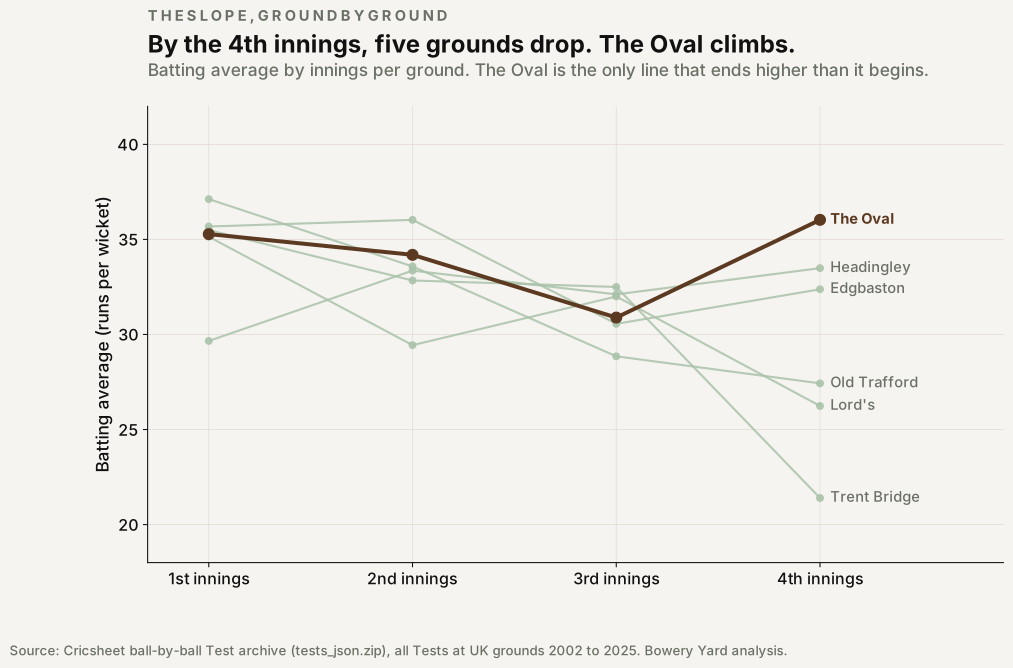
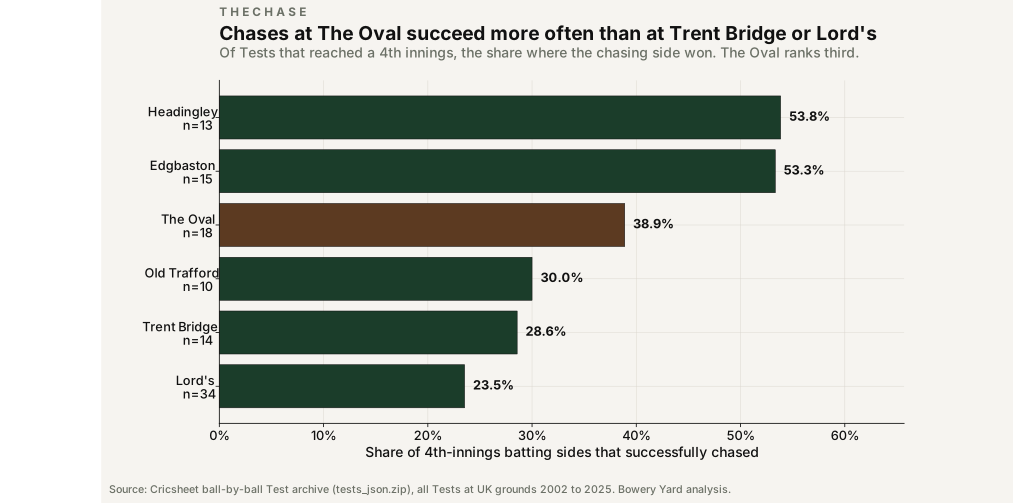
At The Oval, it is not. The 1st-innings batting average across 23 Tests at Kennington is 35.28. The 4th-innings batting average across the 18 of those Tests that reached a 4th innings is 36.03. Batting outcomes do not deteriorate across the match, unlike at most other English grounds. Chase outcomes track the same story: Oval chasers win 38.9% of the time, well above Lord's at 23.5% and Trent Bridge at 28.6%. Section 05 walks through that record in detail.
Runs per wicket, by which innings of the match.
One number per ground per innings: runs scored divided by wickets lost in that innings number, summed across every Test at the ground. Innings are numbered by position in the match, not by calendar day.
Not every Test reaches a 4th innings, so the 4th-innings sample is smaller everywhere. Per-ground counts: 34 at Lord's, 18 at The Oval, 15 at Edgbaston, 14 at Trent Bridge, 13 at Headingley, 10 at Old Trafford. The Rose Bowl has hosted one Test in the window and is excluded.
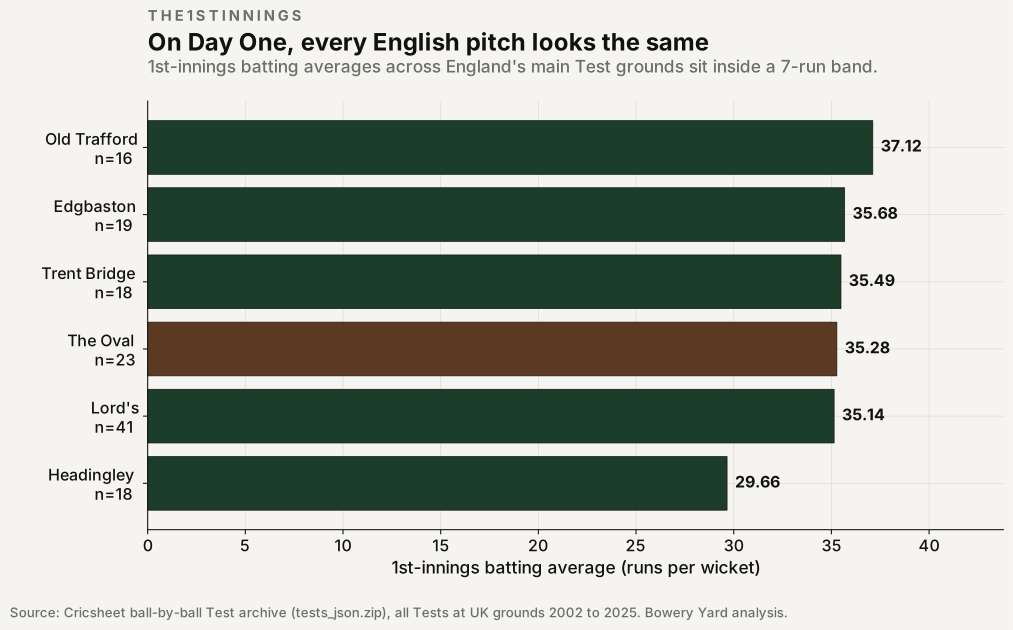
On Day One, the major English grounds look broadly similar.
Begin a Test at any of these six grounds and you are batting on roughly the same pitch. The 1st-innings averages run from 29.66 at Headingley to 37.12 at Old Trafford - a band of 7 runs per wicket across the six ranked grounds, half of which is the gap between any two adjacent grounds. The Oval sits in the middle of the pack at 35.28. On Day One, nothing about Kennington is unusual.
Six pitches break. One holds.
Stay at the same six grounds through to the 4th innings and the band falls apart. Old Trafford's 1st-innings average of 37.12 drops to 27.43. Lord's drops from 35.14 to 26.24. Trent Bridge collapses from 35.49 to 21.40, the deepest fall in the country at 14.09 runs per wicket. Edgbaston drops a more modest 3.30. Headingley actually climbs, from a low 29.66 to a fourth-innings 33.49. Headingley's improvement is real but rests on 13 fourth-innings Tests, the smallest sample among the five grounds that cleared that threshold.
The Oval, alone among the country's heavy-use Test grounds, ends higher than it began. The 4th-innings average of 36.03 sits 0.75 runs per wicket above the 1st-innings number and 14.6 runs above the 4th-innings number at Trent Bridge - a bigger gap, ground to ground, than separates Trent Bridge from Edgbaston on Day One.
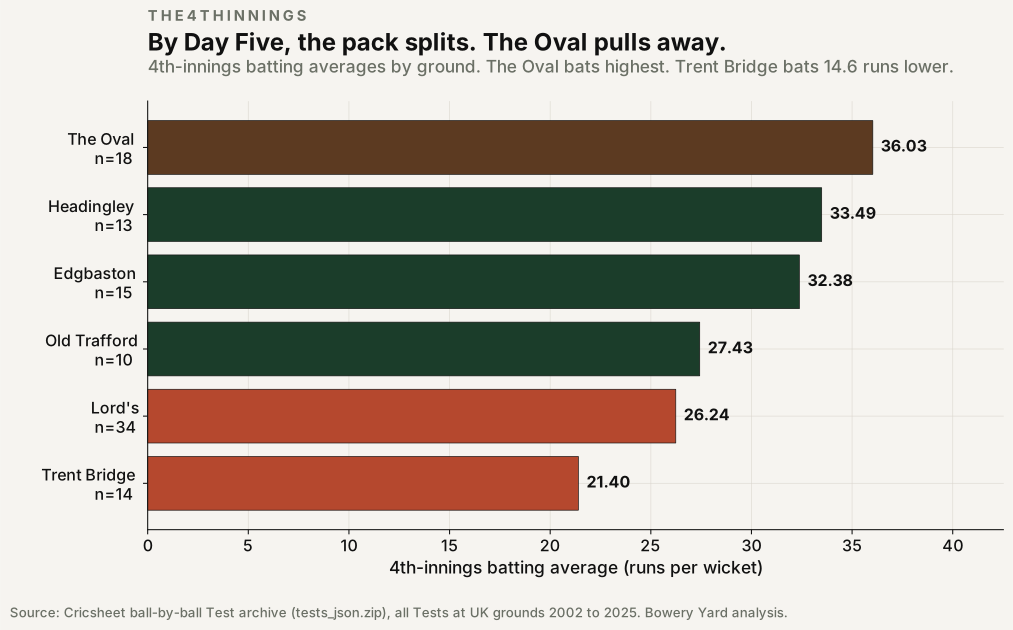
On Day One, the major English grounds start from roughly the same place. By the closing innings, only Kennington holds.
Chases at The Oval succeed where chases at Lord's don't.
Batting average is one read. Did the chasing side actually win is another. Of the 18 Tests at The Oval that reached a 4th innings, the side batting last won 7, lost 8, and drew 3 - a chase success rate of 38.9%. Lord's, with the largest sample in the country at 34 4th innings, has seen the chasing side win 8 of them: a 23.5% chase rate. Trent Bridge sits between, at 28.6%.
Headingley and Edgbaston, the two grounds where the 4th-innings average runs at or above the 1st, post the country's top chase rates - 53.8% and 53.3%. The Oval ranks third of six. The order of finish on chase rate is almost the same order of finish on 4th-innings batting average, with one small reshuffle in the middle. Two separate measures of the same record agree on which grounds reward the side batting last. With 18 fourth-innings Tests at The Oval against 34 at Lord's, those percentages carry real uncertainty - the direction is consistent across both measures, but the precise rates should be read as estimates.
The chase scores faster at The Oval than the England average, almost block by block.
Bucket every delivery of a 4th innings into ten-over blocks. At The Oval, the chase-side run rate sits above the rest of England's 4th-innings average across nearly every block of the chase. Across the other five ranked grounds, the same metric runs about half a run per over lower for almost the entire 4th innings.
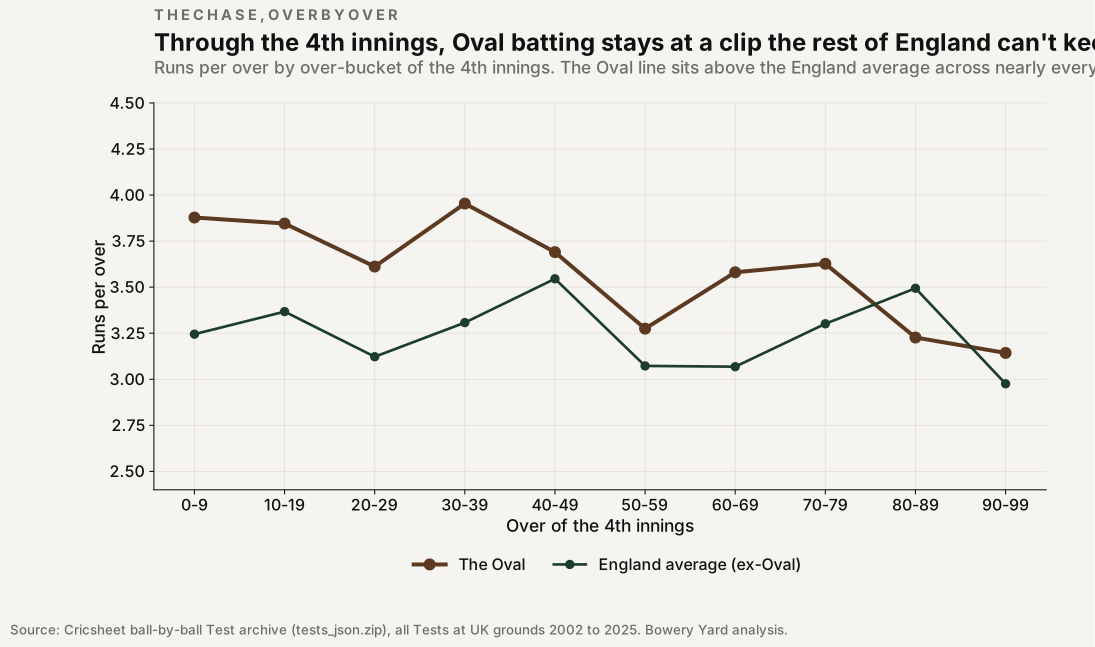
What changes at The Oval is the rate at which the runs come, not the way the wickets fall when they do.
The Kennington toss is not the same problem.
A Test captain's toss decision is an expected-value problem. The inputs are the side's relative batting and bowling strengths, the weather, the green tinge or the lack of one, and a number every captain knows by feel: how much does this pitch punish the side batting last. At six English Test grounds, that number is large and positive. At Trent Bridge it is 14.09 runs per wicket. At Lord's it is 8.90. At Old Trafford it is 9.69.
At The Oval it is -0.75. A captain reaching for the same heuristic at Kennington is reaching for a number with the wrong sign. Bat first to put pressure on the Day-Five chase is a sentence that makes sense at four other English grounds. At the four grounds where outcomes deteriorate, the fall is sharp; at The Oval it never arrives. Kennington holds.