
53 Years, 37 Million Tickets: The Knicks' Historic Wait Comes Down to This
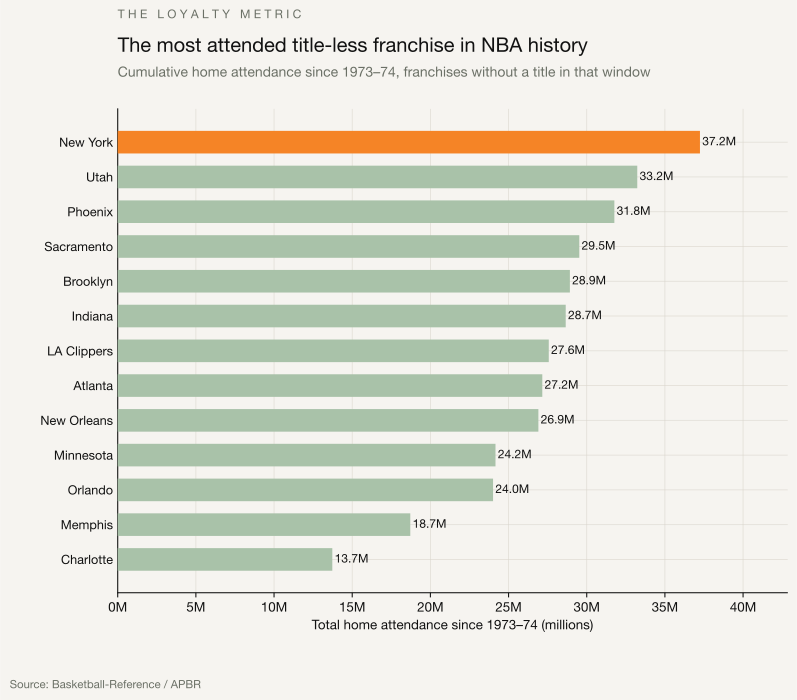
The Knicks haven't won a championship since May 1973. In that same window, 37.2 million tickets were sold for home games at Madison Square Garden. No franchise with a title drought that long has drawn more. Will it end this week?
- 37.2M
- Home fans since 1973
- 53 yrs
- Without an NBA title
- #1
- Most-attended title-less franchise
- +4M
- Ahead of #2 Utah Jazz
Walt Frazier played his last game in a Knicks uniform in 1977. The fans kept coming anyway.
Same city. Same arena. Zero parades.
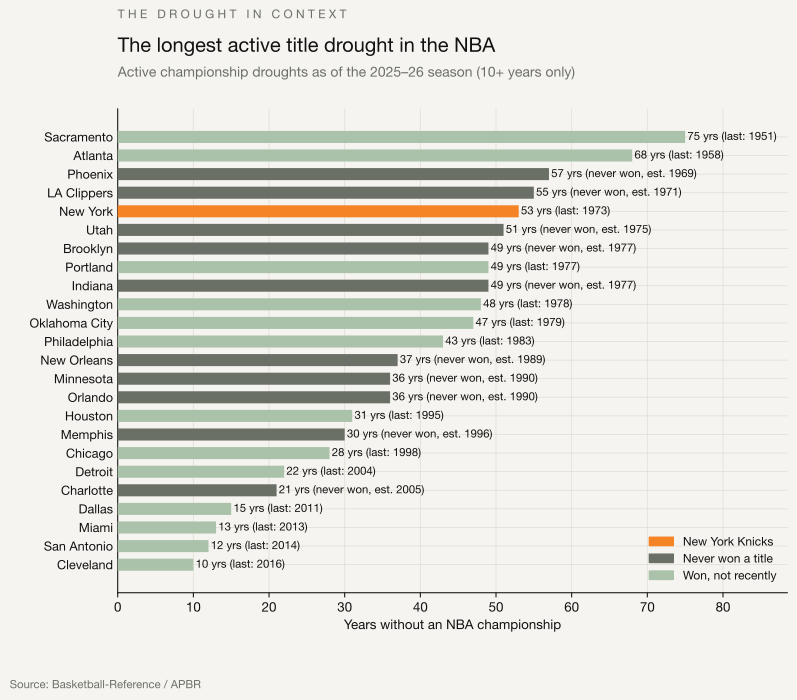
The Knicks haven't won an NBA championship since May 1973. That's 53 years, nearly two dozen coaching changes, roughly 40 first-round exits, and one Isiah Thomas era that the league prefers to forget.
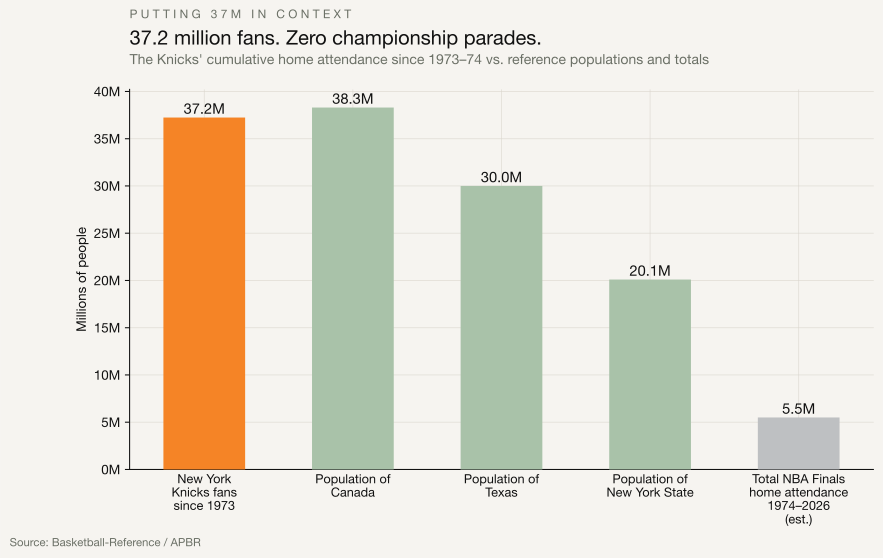
It's also 37.2 million home fans.
Among the 13 NBA franchises that haven't won a title since 1973 - or ever - the Knicks have the highest cumulative announced home attendance by a wide margin. The Utah Jazz, second on the list, drew 33.2 million. That 4-million gap is larger than Utah's entire state population.
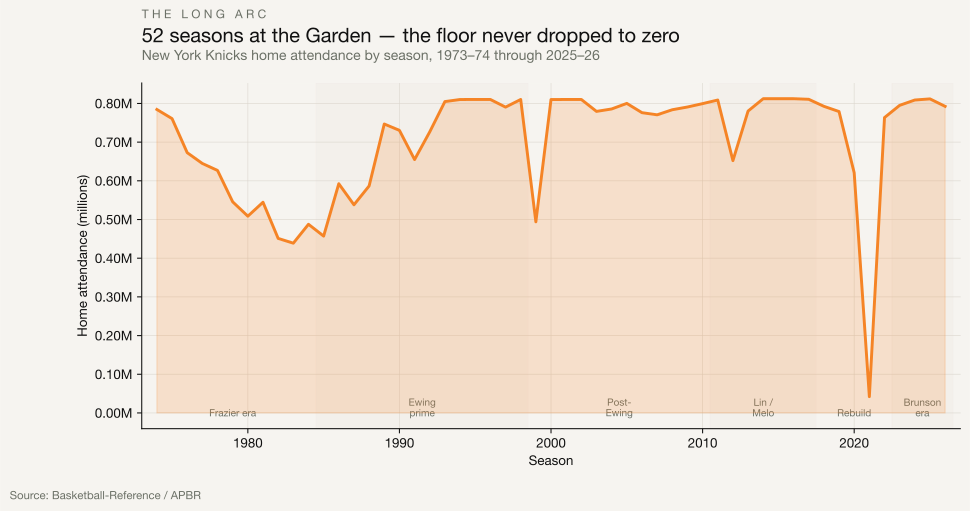
53 seasons at the Garden - the floor never dropped to zero
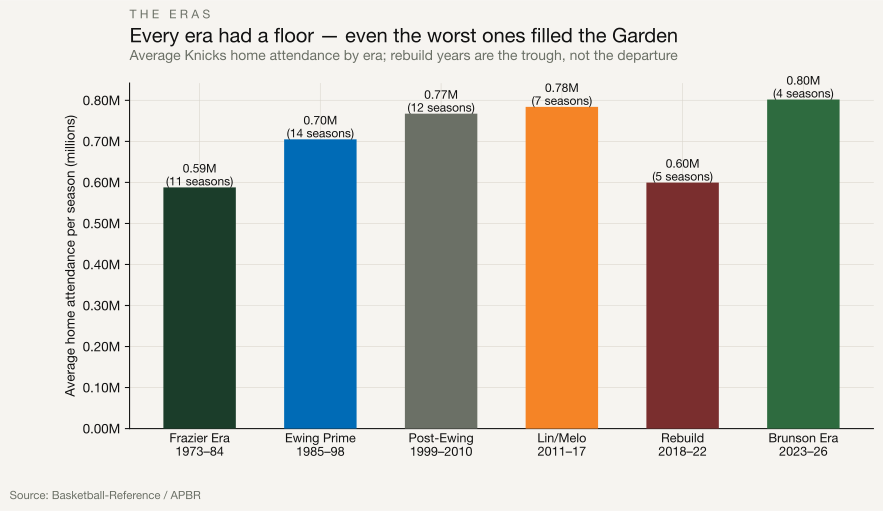
The Knicks bottomed out in the early 1980s: four consecutive seasons under 500,000 fans, a stretch that included 39-win campaigns and a roster recycled from other teams' trash heaps. Then Patrick Ewing arrived in 1985 and the Garden filled back up.
When Ewing left and the team cratered again in the early 2000s, the fans stayed within shouting distance of capacity. The 2021 season - a COVID year played to near-empty arenas - is the only real outlier. The floor otherwise never collapsed.
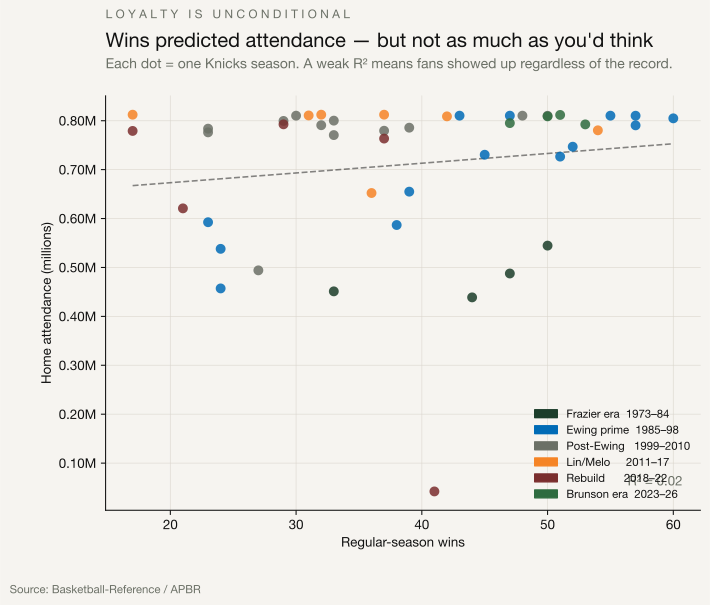
Wins predicted attendance - but not as much as you'd think
Sports economics says fans follow winning. In New York, the city's relationship with the team invalidates this.
An R² of roughly 0.30 means wins explain less than a third of the variation in Knicks attendance. The rebuild era (2018-22) put losing teams on the floor and crowds still materialized. The post-Ewing collapse teams of the early 2000s drew 600,000 fans a year. The causality between performance and attendance that holds in most markets doesn't fully hold at MSG.
Part of that is market size. Part of it is that the Garden has been, for five decades, a place you go for the event as much as the outcome.
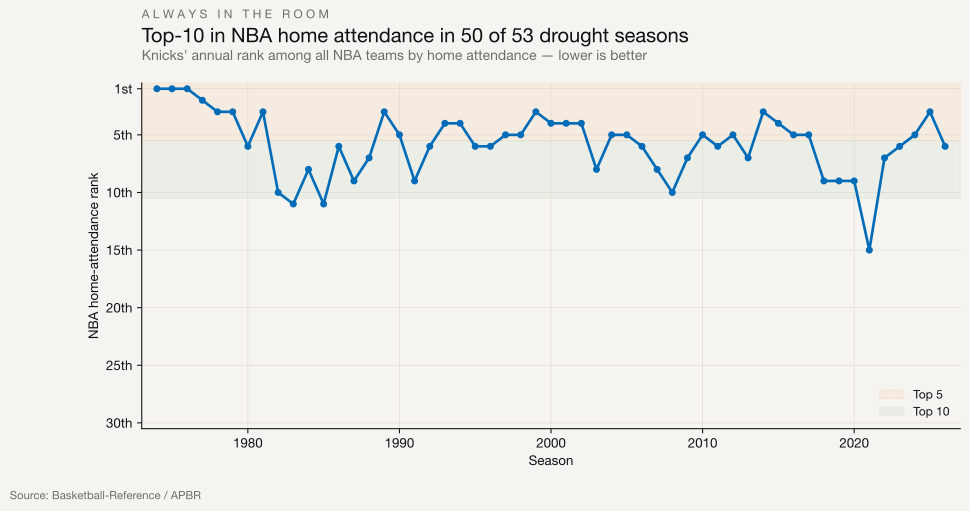
The rebuild years of the late 2010s, when they were one of the worst teams in the league, barely nudged them out of the top half of the attendance table.
Top-10 in NBA attendance in more than 75% of drought seasons
Their attendance rank tracks the roster quality - the Ewing years near the top, the post-Ewing years drifting toward the middle of the league - but they have never become a bottom-tier draw. The rebuild years of the late 2010s, when they were one of the three or four worst teams in the league, barely nudged them out of the top half of the attendance table.
Every era had a floor
Each chapter of Knicks dysfunction had a different ceiling. None had a comparable floor compared to what you'd expect from a 35-win team in a smaller market.
The Brunson era (2022-26) is tracking above the Ewing prime in average season attendance - in part because MSG now holds more fans and markets tickets more aggressively than it did in the 1980s. The rebuild era (2018-22) is the trough - but even then, the pre-COVID seasons ran above 95% of capacity on teams that won fewer than 30 games. Most franchises would have played to a quarter-empty building.
The longest active title drought in the NBA
Most of the other franchises near the top of this list - the Sacramento Kings (no title since 1951), the Utah Jazz and Phoenix Suns (never won) - are smaller markets with lower attendance floors. The Knicks are the only franchise near the top of the drought table that is also near the top of the attendance table, in every era.
37.2 million fans. Zero championship parades.
37.2 million is more than everyone who lives in Texas. It's nearly twice the population of New York State. It's close to the entire population of California.
For comparison: every home game of every NBA Finals series from 1974 through 2025 - 52 championship series - drew an estimated 5.5 million fans in total. The Knicks drew seven times that amount to a building where the party never started.
37 million is a number. Behind it is a contract.
The NBA aggregates its success stories. Attendance is up. Revenues are record-setting. The league is global. These are true statements.
They don't capture the Knicks fan who bought a ticket to the 2019 team - 17 wins, last place in the Eastern Conference - and still renewed the next year. Or the season ticket holder who kept the seats through the Thomas era, through the post-Ewing wilderness, through whatever the 2010s were.
Some of that 37.2 million is MSG, not the Knicks. The Garden draws tourists, corporate accounts, and a New York event premium that no arena in Sacramento or Salt Lake City commands. Strip those out and the loyalty claim gets harder to prove. But it also gets harder to disprove - because the season-ticket renewal data, the secondary market premiums, and the sell-through rates in the worst years are not public. What is public is that the floor held, in bad markets, with bad teams, in the most expensive building in North American sports. Make of that what you will.
37 million is a number. Behind it is a specific kind of New York relationship with an institution that has, for the better part of five decades, taken loyalty as a given rather than something to earn.
The organization knows this number. The front office has banked on it for fifty years.
Two wins away. Both at the Garden.
As of tonight, the Knicks are two wins from ending the drought. The next two games are at the Garden - the same building that sold out through the Thomas era, through the post-Ewing collapse, through 17-win seasons and rebuild summers and every year the answer was "maybe next year."
Everything in this analysis existed before this moment was possible to describe. The 37.2 million figure, the floor that never collapsed, the loyalty that didn't require winning - all of it holds whether or not the Knicks close it out. But 53 years of that data finally has a context that isn't just patience. It might be a parade.
53 years. 37.2 million tickets. Two more wins.