Mondays Hit the Hardest
Through ten weeks of the 2026 MLB season, Monday is the single best day of the week to hit a home run - once you control for at-bats. We pulled every box score, normalized by swings, and went looking for what else the data quietly says about the long ball.
- 35.9
- HR per 1,000 AB on Mondays
- +10%
- Above the average day
- Wed
- The quietest day for the long ball
- +8%
- Home-field boost, league-wide
On Mondays, big-league hitters trot 22% more often per swing than they do on Wednesdays. We didn't expect that either.
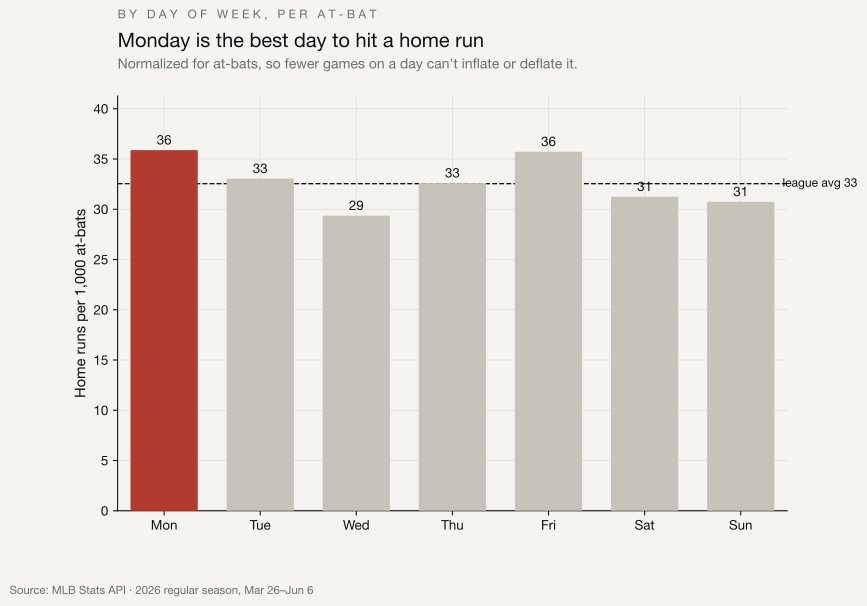
Monday is the best day to hit a home run
Across 963 completed games from Opening Day through June 6, big-league batters homered 35.9 times per 1,000 at-bats on Mondays. That's the highest rate of any day of the week, about 10% above the league average and 22% above Wednesday, the quietest day.
Friday is a close second at 35.7. Together, Monday and Friday are the only two days noticeably above the league line. Wednesday and Sunday sit clearly below it.
Friday looks like the leader. It's not.
If you just count home runs, Friday wins - 372 total, ahead of everyone else. But Friday also gets more at-bats than any other day (10,413 of them), because almost every team plays. Thursday is the mirror image: half the league is traveling, fewer games, only 204 home runs hit. That looks like a bad hitting day. It isn't. Per swing, Thursday is right at the league average.
This is the whole reason to normalize. The schedule, not the hitters, drives the raw count. A travel day moves home runs around the calendar without changing how often the ball gets put in the seats.
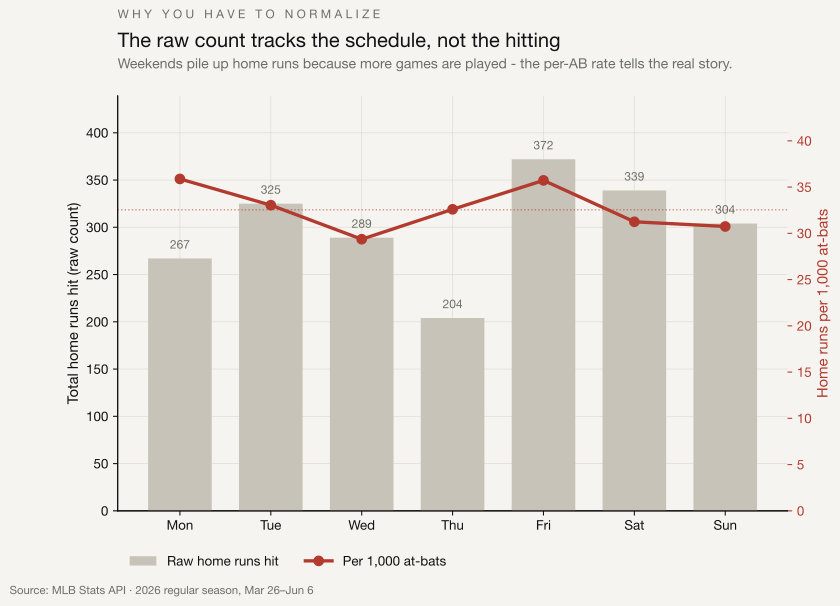
The schedule, not the hitters, drives the raw count. Normalize it and a different day wins.
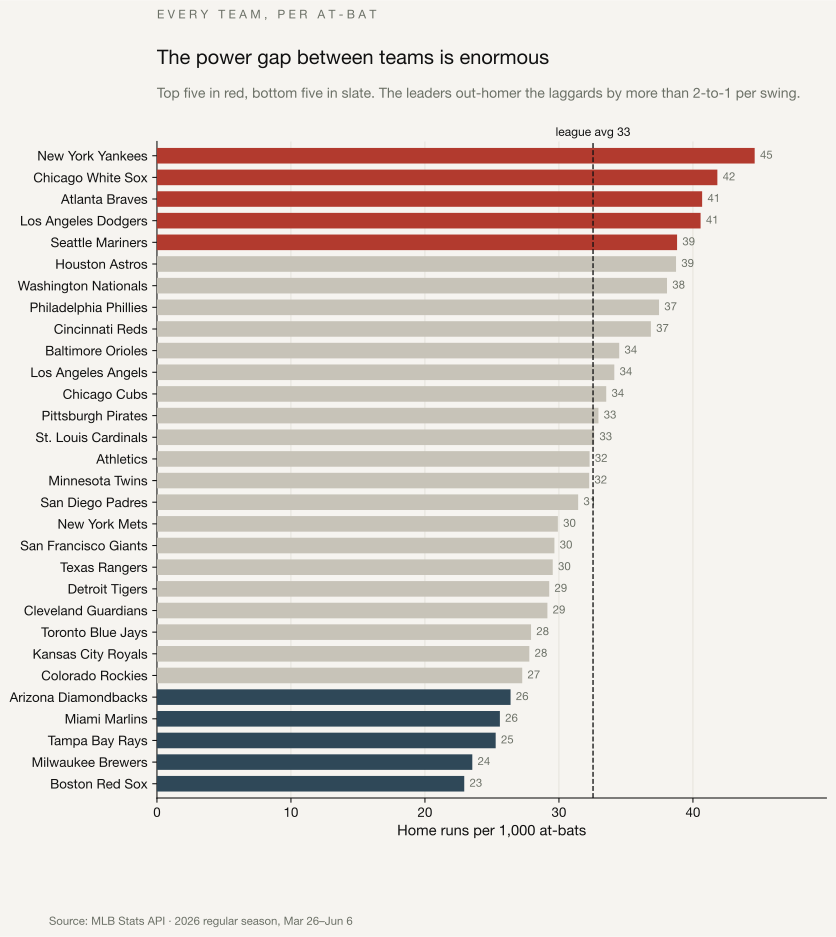
The Yankees hit twice as often as the Red Sox, per at-bat
The 2026 Yankees lead the league at 44.6 home runs per 1,000 at-bats. The Red Sox sit at 22.9, dead last. That's a two-to-one gap, per swing, across nearly identical sample sizes (~2,100 at-bats each). The White Sox, Braves, Dodgers, and Mariners round out the top five - power, surprisingly, isn't a National League or American League story this season.
The bottom of the table is where it gets interesting. Boston, the Brewers, the Rays, and the Marlins are hitting fewer home runs per at-bat than the league did in 1996. Some of that is roster turnover and some is ballpark - we'll get to that in a moment.
Home teams homer 8% more often than visitors
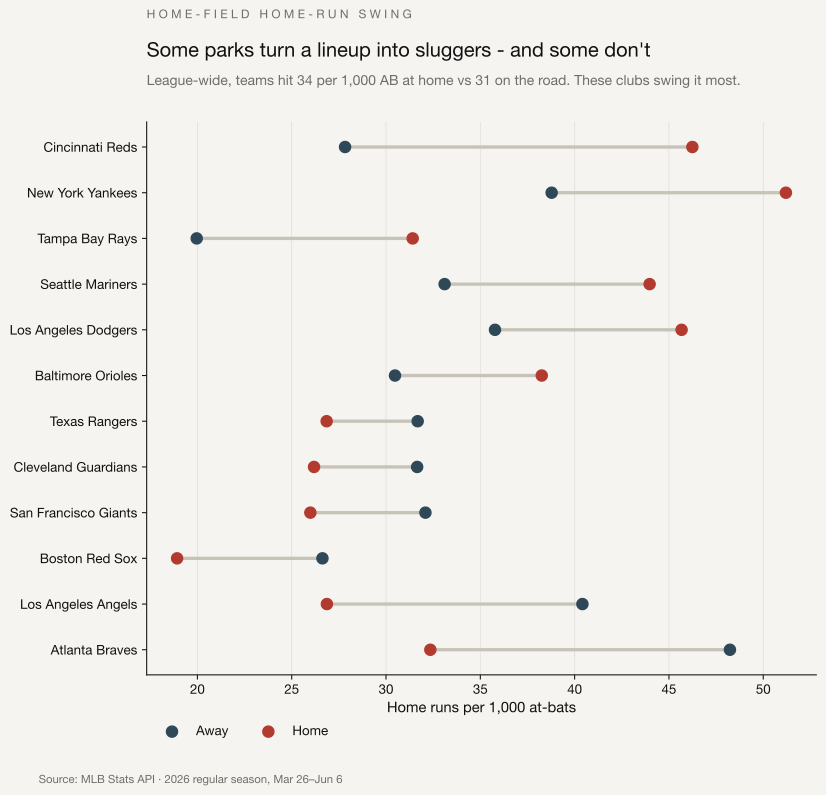
League-wide, teams hit 33.8 home runs per 1,000 at-bats at home and 31.4 on the road. That's a real but modest gap - about an extra home run per 400 at-bats. The interesting part is who carries it.
The Reds get a +18.4 boost at Great American Ball Park. The Yankees get +12.4 at home. On the other end, the Braves and Angels lose double-digit home runs per 1,000 at-bats when they go home - they hit better on the road than in their own park. Truist Park and Angel Stadium are, this season, suppressing the home lineup.
The ball flies further after dark
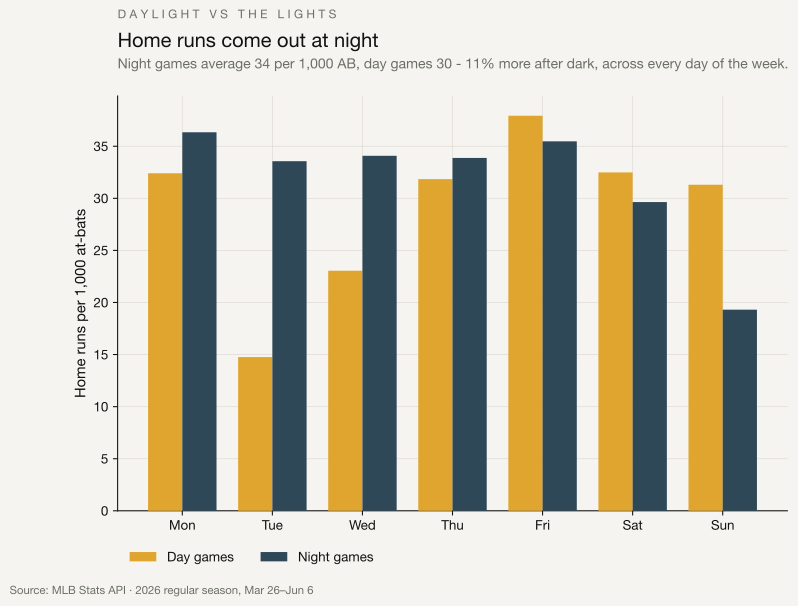
The intuition that warm afternoons help the ball carry turns out to be wrong - at least so far this season. Night games average 33.9 home runs per 1,000 at-bats; day games sit at 30.5. That's 11% more home runs after dark, and the pattern holds across every day of the week except Wednesday (mostly day games anyway).
Possible explanations: cooler dense air at night travels worse, but stadium lights eliminate the harsh visibility batters complain about during late-afternoon games. We don't have the data to settle that argument. What the data does say is clear - the evening slate is the home run slate.
Take the ballpark away, the power gap mostly holds
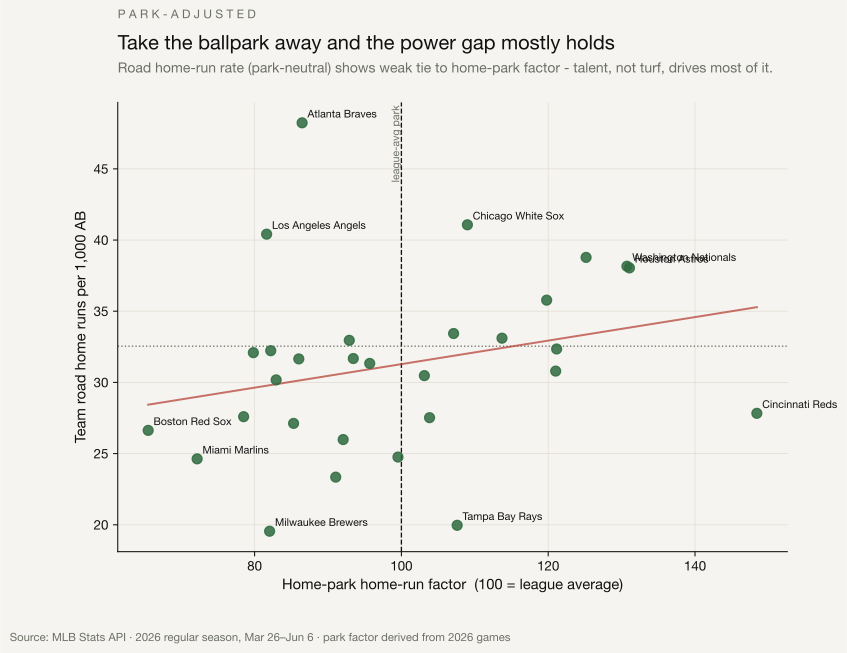
Yankee Stadium plays at a 157 home-run factor this year - 57% above league average. Great American, Dodger Stadium, and T-Mobile Park are all above 135. Fenway, oddly, plays at 58: the lowest-HR park in baseball this season, well below loanDepot, Oracle Park, and the Cleveland mausoleum.
Strip the park away - look only at road games - and the team rankings barely move. The Yankees are still elite on the road; the Red Sox are still last. Park effects shape who hits where, but they're not what's separating the top of the league from the bottom this year. It's the lineups.
Cold openings, summer fireworks
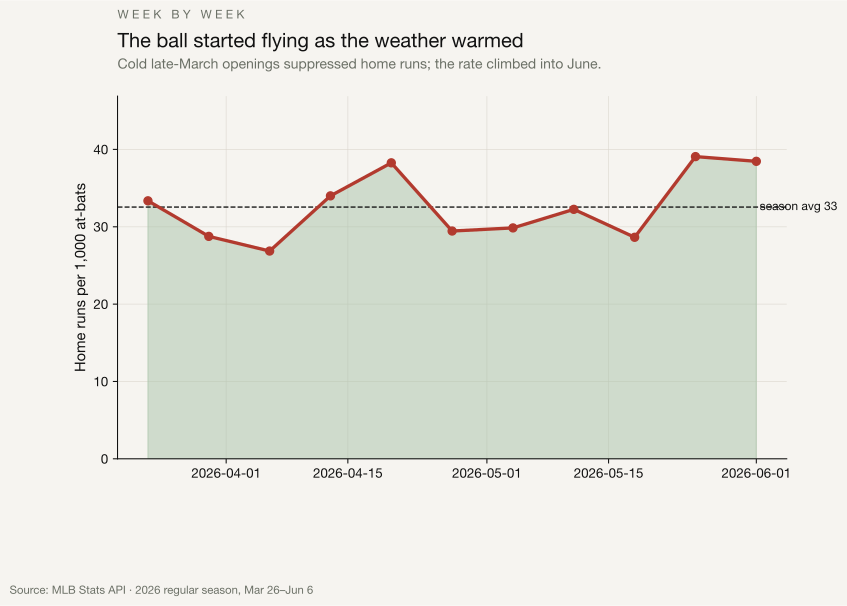
The 2026 season opened cold - 28.8 home runs per 1,000 at-bats in the first full week of April, well below the season average. By late May the rate had climbed past 39, the highest seven-day stretch of the year. The pattern repeats every season: April suppresses, June liberates.
The Monday and Friday peaks at the top of this piece sit on top of this longer arc. Both will probably drift toward 38-40 by the All-Star break. The relative order - Monday best, Wednesday worst - is what we're betting holds.
The signal lives in the denominator
Baseball is a counted sport, but most of what gets counted is the wrong thing. Raw home run totals reward a busy schedule. Per-game averages reward a lineup that grinds out at-bats. The honest unit is the swing - what fraction of the time a batter, given the chance, puts the ball over the wall.
By that measure, the 2026 Yankees are the best home-run team in recent memory. The Red Sox are having a historically quiet year at the plate. And the most explosive day to be at a ballpark - per swing, per opportunity - isn't the Friday night under the lights you'd guess.
It's Monday.