
The Colonial Reckoning
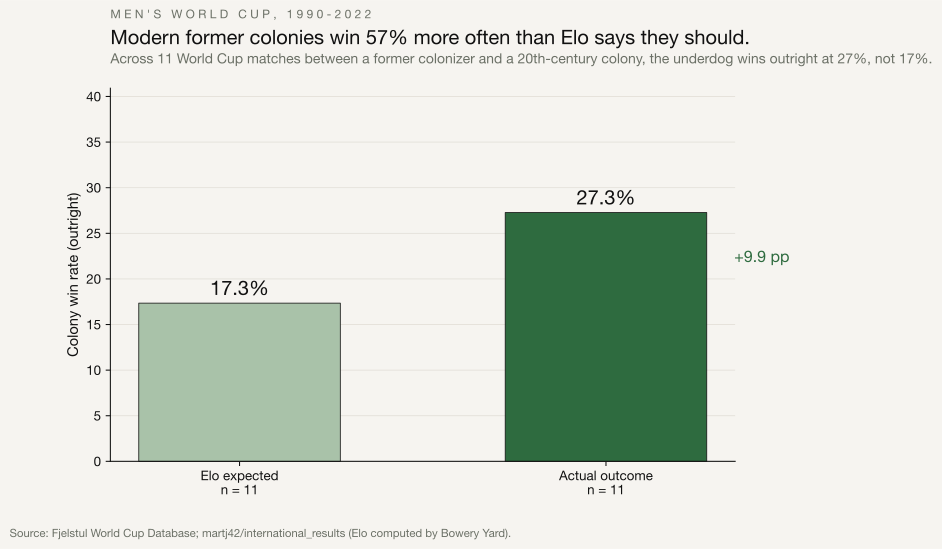
When a former colony plays its former colonizer at the Men's World Cup, the underdog wins 57 percent more often than Elo predicts. The pattern is a 20th-century story. The older pairs go the other way.
- +57%
- Modern colony win rate vs Elo
- 3 wins
- in 11 modern colonial WC matches
- France, Spain
- Colonizers beaten at the World Cup
- -12 pp
- Pre-1900 colonies under-perform Elo
Senegal beats France on opening night in 2002. Morocco knocks Spain out of the round of sixteen in 2022. France and Senegal met again at the 2026 World Cup, the twelfth time a former colony has played its former colonizer at the men's tournament. The script finds a beat. We checked whether the data carries it.
Modern colonies win more often than the ratings say they should.
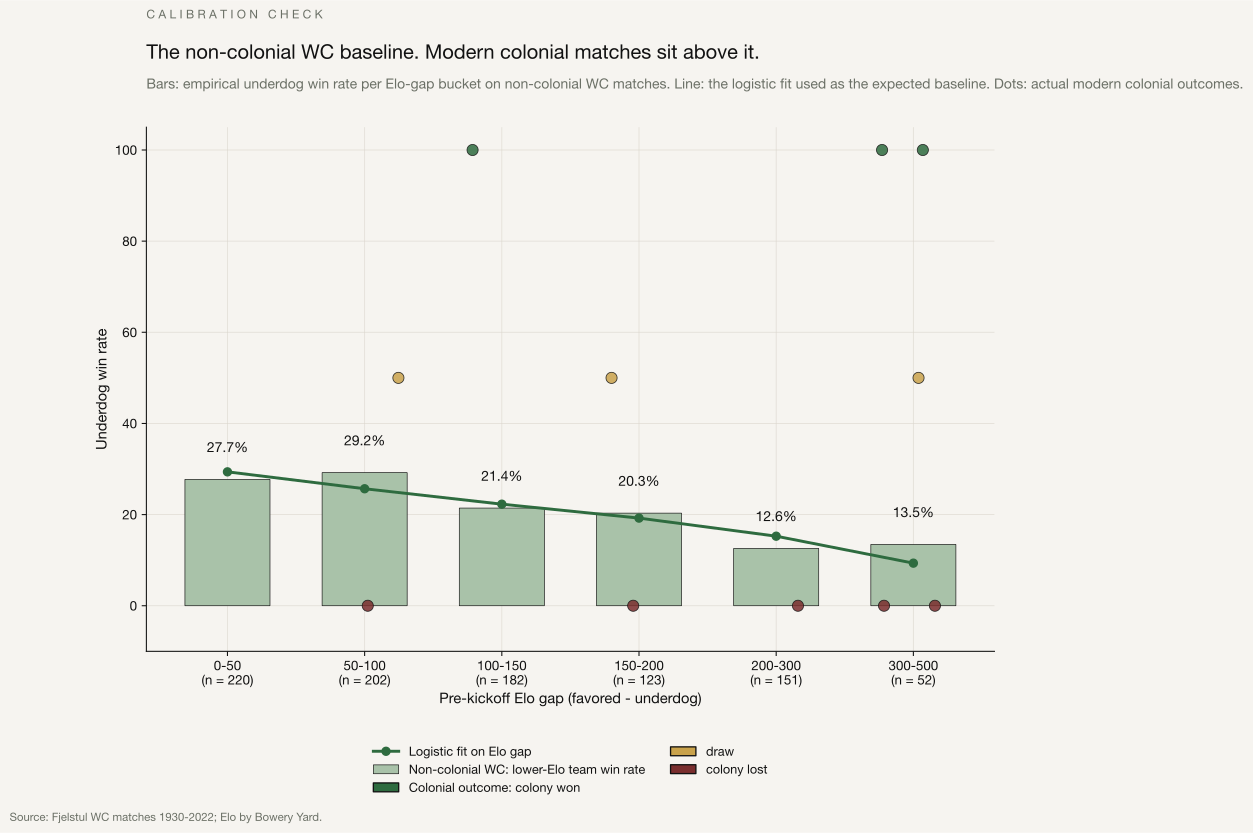
We took every men's World Cup match from 1930 to 2022 and computed each side's pre-kickoff Elo, updated game by game across the full international football record on the open martj42 dataset. Then we lined up the eleven matches where a colony that gained independence in the 20th century played its former metropole at the World Cup and the colony was the rating underdog.
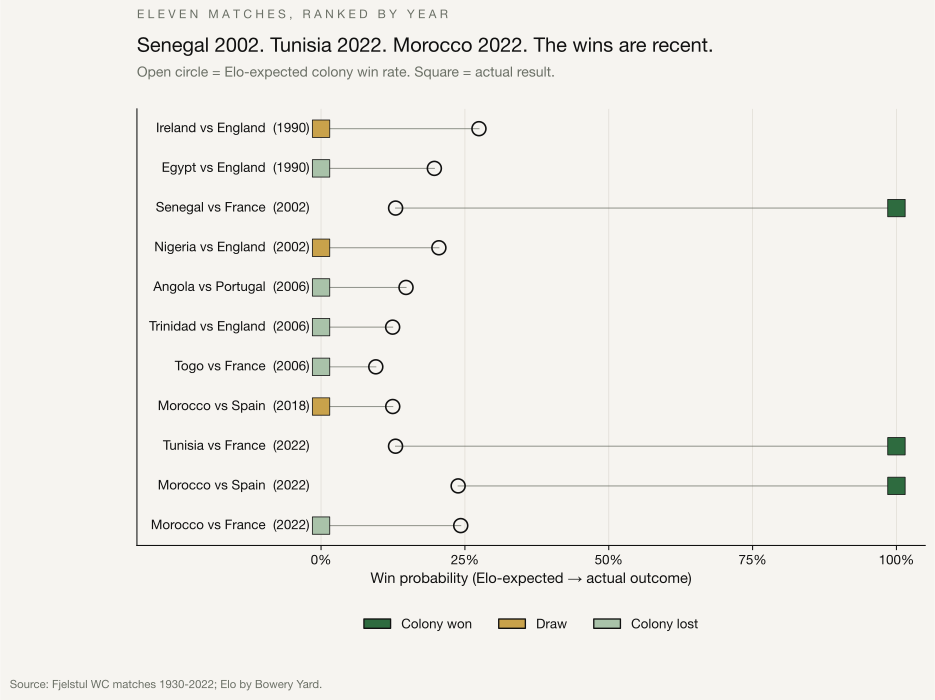
The colonies won three. They drew three. They lost five. By Elo alone, they should have won 17 percent. They actually won 27 percent - a ten-percentage-point lift, a 57 percent uplift over the rating-only baseline. Summed across the eleven matches, Elo expected 1.91 colony wins. They got three. The gap is one win on a sample of eleven; a Wilson 95 percent confidence interval on three-of-eleven runs from roughly ten to fifty-three percent, which contains the Elo-expected rate. The direction is in the record. The interval is wide. The sample is too small to rule out ordinary variation.
The eleven matches
| Year | Colony | Colonizer | Stage | Elo gap | Expected | Result |
|---|---|---|---|---|---|---|
| 1990 | Ireland | England | Group | 51 | 28% | 1-1 draw |
| 1990 | Egypt | England | Group | 167 | 20% | 0-1 loss |
| 2002 | Senegal | France | Group | 301 | 13% | 1-0 win |
| 2002 | Nigeria | England | Group | 154 | 20% | 0-0 draw |
| 2006 | Angola | Portugal | Group | 260 | 15% | 0-1 loss |
| 2006 | Trinidad and Tobago | England | Group | 314 | 12% | 0-2 loss |
| 2006 | Togo | France | Group | 395 | 10% | 0-2 loss |
| 2018 | Morocco | Spain | Group | 313 | 12% | 2-2 draw |
| 2022 | Tunisia | France | Group | 301 | 13% | 1-0 win |
| 2022 | Morocco | Spain | R16 | 102 | 24% | 0-0, won 3-0 on pens |
| 2022 | Morocco | France | Semi | 95 | 24% | 0-2 loss |
Expected = Elo-gap-only logistic fit on non-colonial men's World Cup matches. Result column shows the regulation score; the 2022 Morocco-Spain shootout is the only knockout decided on penalties.
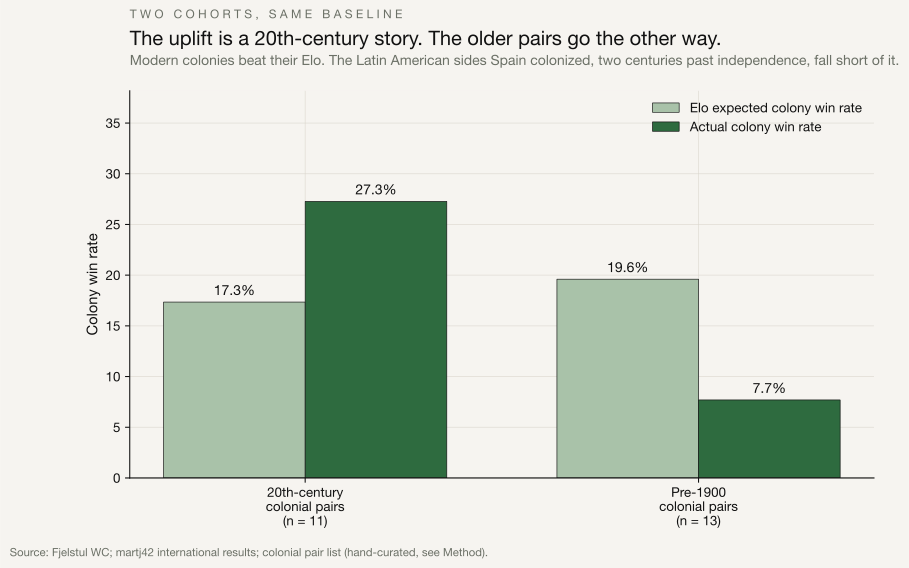
The older pairs go the other way.
The piece would write itself if the modern pattern repeated for the Latin American sides Spain once colonized - Argentina, Mexico, Uruguay, Chile, Paraguay, and the rest, all of whom won their independence in the early 1800s. It does not. Across the thirteen World Cup matches where one of those sides played Spain as the rating underdog, the colony's expected win rate was 19.6 percent. The actual was 7.7 percent. (The historical scope also includes Brazil-Portugal, but Brazil was the higher-rated side at both of their World Cup meetings, so the underdog comparison is entirely Spain against the Americas.)
The pre-1900 cohort under-performs its Elo by twelve percentage points - the same size as the modern uplift, in the opposite direction. Spain's 2010 squad, which lifted the trophy and beat every former Spanish-American colony it drew that summer, tilts the table. Pull the 2010 cohort out and the historical deficit shrinks, but it does not reverse sign. The asymmetry is worth naming. If the narrative were really about generational memory, Spain against Latin America is the place it should ring loudest. It doesn't.
Twenty pairs. Ten that have ever played.
The list is editorial. We restricted to relationships where the colonized state was a non-self-governing territory into the 20th century and gained independence after 1900. That cuts the United States from the British column and most of South America from the Spanish column. It keeps the Algerias, the Senegals, the Indonesias. It also keeps Spain's short protectorate in northern Morocco, the only pair that runs through both sides of the headline. Reasonable people could disagree on individual pair classifications, and with eleven matches a single inclusion or exclusion shifts the headline by several percentage points.
Twenty pairs make the modern list. Ten of them have actually met at the men's World Cup, in eleven matches all told (Spain and Morocco have played twice). The list lives in analysis/colonial/scripts/colonial_pairs.py with a one-line note on each pair's independence year and source.
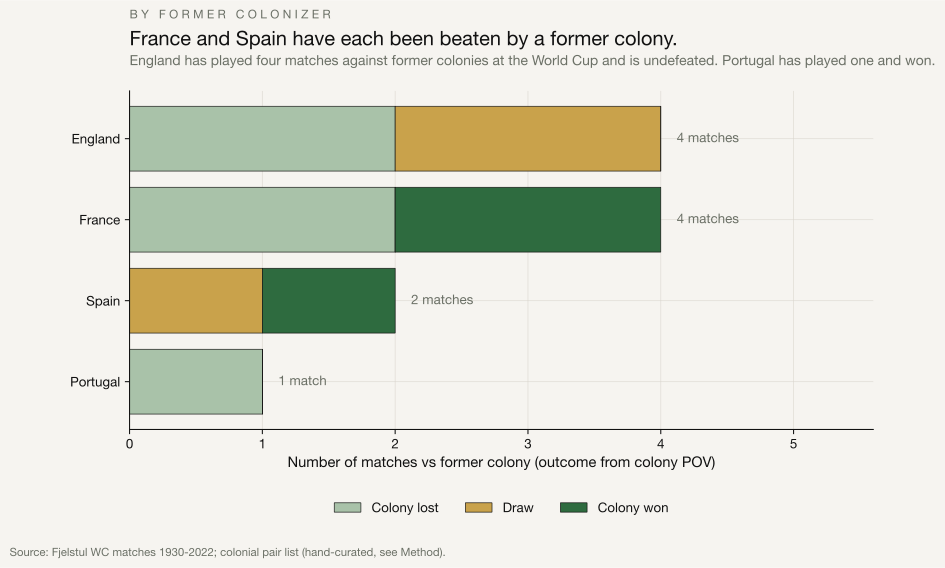
The script finds a beat. The data carries it for half a century and stops cold a century before that.
The colonies were genuine underdogs.
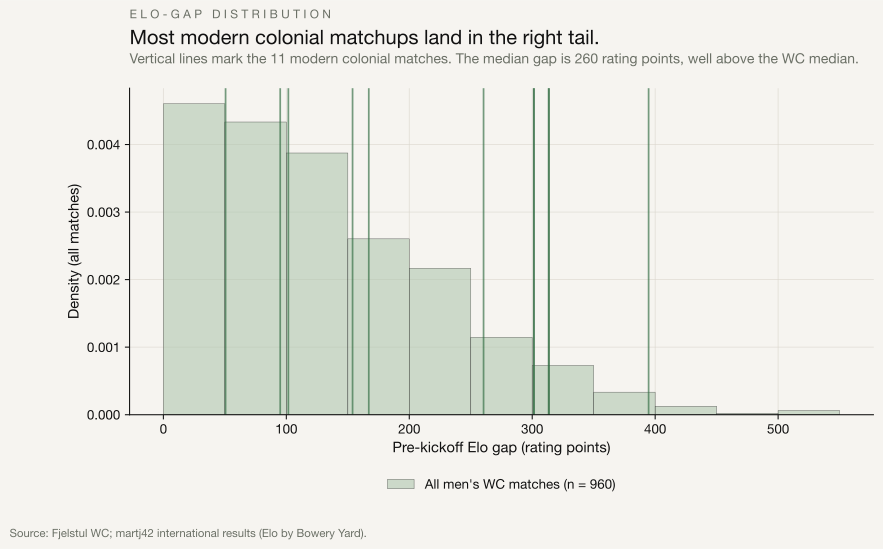
One way the headline could be hollow is if the matches were not actually mismatched - if our colonies were quietly favored anyway and beat their Elo on lopsided fixtures. They were not. The median pre-kickoff Elo gap across the eleven modern colonial matches is more than two hundred rating points, a gap that translates to roughly a one-in-six baseline win expectation against an evenly matched World Cup field. Ten of the eleven matches sit further out than the global World Cup median gap.
The headline is not the colonies sneaking up on bad teams. It is the colonies, who arrived as underdogs, beating their underdog rate by half-again.
Senegal 2002. Tunisia 2022. Morocco 2022.
The wins are recent and they are famous. Senegal opened the 2002 World Cup by beating France 1-0 in Seoul, with both the 1998 World Cup and the Euro 2000 trophies still in the French cabinet. Tunisia beat France 1-0 again in 2022, against a rotated, already-qualified France side. Morocco knocked Spain out of the round of sixteen in 2022, scoreless after extra time, winning the shootout 3-0 after Spain missed all three of its attempts.
The losses are less famous and they are clustered. Togo, Angola, and Trinidad and Tobago all lost at the 2006 World Cup in the first top-level meeting their program ever played against the colonizer. Egypt lost to England in 1990, in a tournament where Egypt's group went home without a win. The pattern in the headline is present in the record. The pattern in the names is that the colonies who do win are the ones playing the colonizer on a second or third trip to the tournament, not a debut. Togo, Angola, and Trinidad each lost their tournament debut to the colonizer. Tunisia and Morocco arrived in 2022 with multiple World Cups already on the CV.
The bracket sample is two matches.
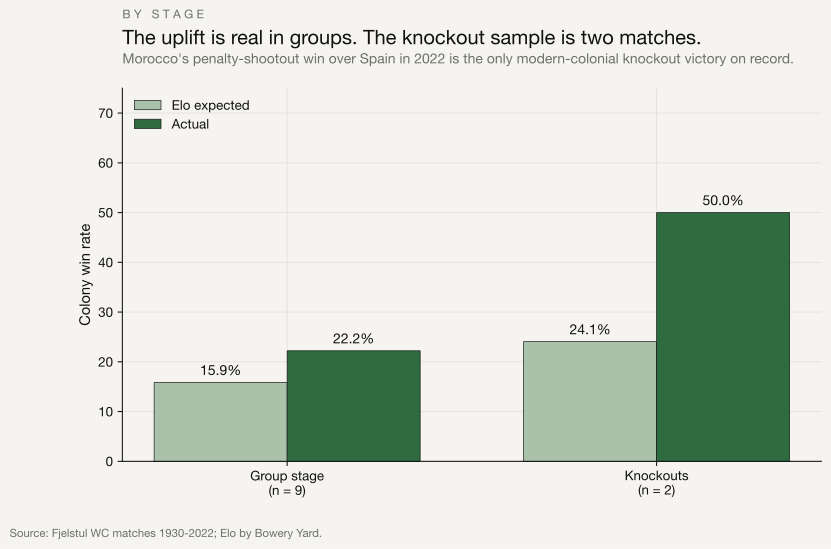
The pitch for this piece was a knockout-stage angle, and the data here gets thin. Only two of the eleven modern colonial matches are knockouts. Morocco beat Spain in the 2022 round of sixteen. France beat Morocco in the semi-final a week later. One-and-one. We are not going to drape an effect size on n equals two.
With that disclaimer up front, here is the cut: group-stage colonies sit at twenty-two percent actual versus sixteen percent expected, and knockout colonies sit at fifty percent versus twenty-four. The direction lines up; the knockout bars are built on two matches. The honest read is that the headline, as the data sits today, is a group-stage finding. The 2026 World Cup will add at most two or three more colonial-pair fixtures before the question can really be asked of the bracket.
The surprise is in the record. The script is older than the data.
Elo rates teams by results. A motivated underdog who runs a sustained over-performance shows up in the ratings the next time we look. The finding here stays small partly because the reckoning, to the extent it exists, gets re-priced into the colony's rating every cycle. Senegal showed up in 2018 with a higher Elo than it had going into 2002. Morocco is showing up in 2026 with a higher one than it had going into 2022.
These matches do not arrive neutral. The history is loud, the broadcasters lean into it, and the players hear about it before and after the whistle. None of that is in the dataset. What is in the dataset is the result. In these eleven matches the underdogs win more often than Elo says they should. That is the surprise, quantified. Whether the colonial history is what causes the bump, or just the loudest story we tell about it, the record cannot say.