The Winter Track
For 132 winters, when every other major New York racetrack went dark, one kept running. On June 28, 2026, after a final race in Ozone Park, Aqueduct went dark too. We matched 77 years of JFK weather to its racing calendar to measure the grind the Big A absorbed - and is now handing off.
- 43.7°F
- Average high, winter race days
- 100%
- Downstate winter cards at Aqueduct
- +39°F
- Warmer at Saratoga, same circuit
- 8°F
- Coldest race-day high (1977)
Three New York racetracks shared one circuit, one set of silks, and one calendar. Only one of them raced in January. This month, it stopped.
The temperature they raced in
The New York Racing Association ran Thoroughbred racing at three tracks - Belmont Park, Saratoga Race Course, and Aqueduct in Ozone Park, Queens. Two of them were warm-weather operations. The third was not.
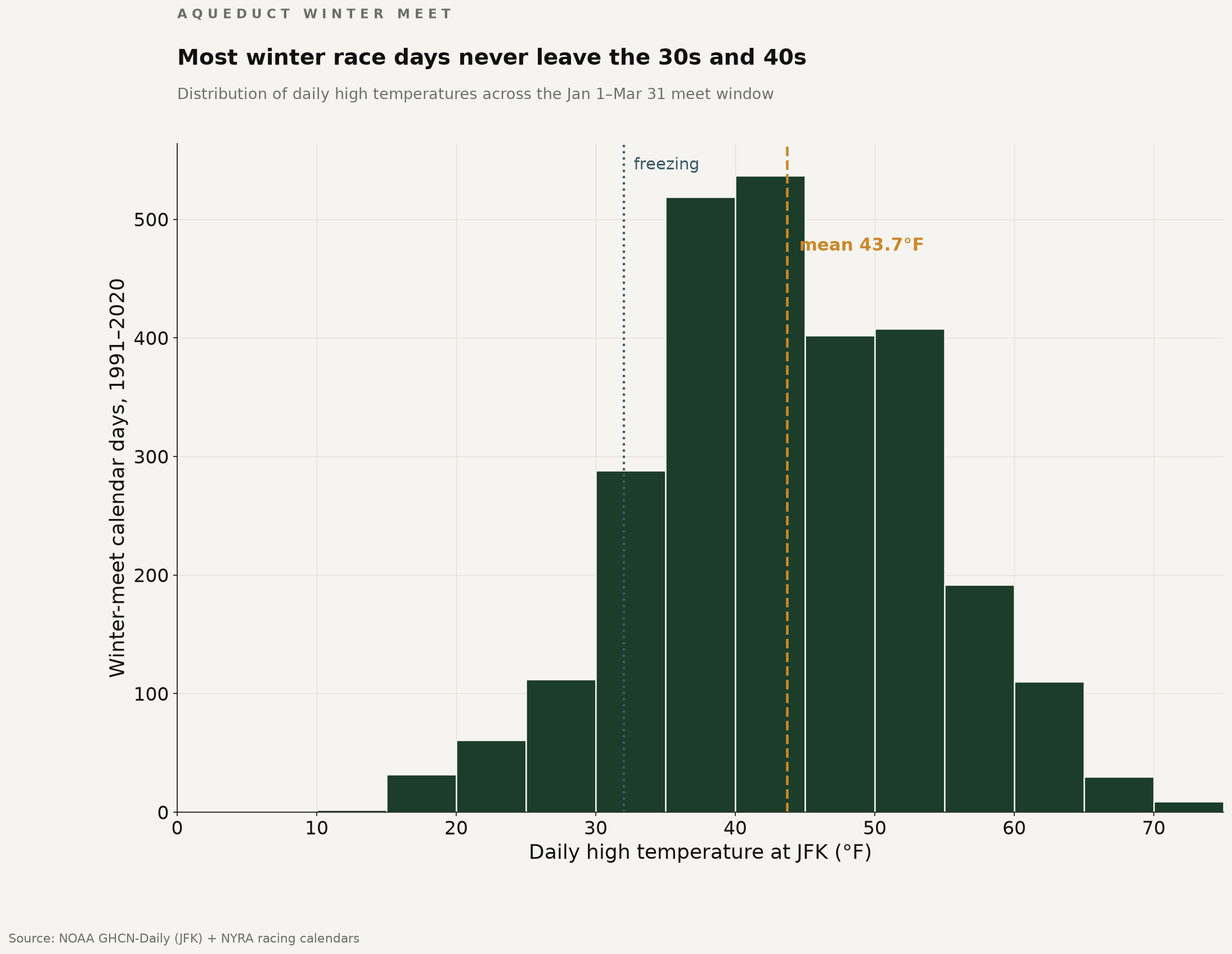
Aqueduct's winter meet ran from January 1 to the last week of March. Match that calendar to the daily record at JFK International Airport, the closest weather station, about four miles south of the track, and the number that falls out is 43.7°F - the average afternoon high across the meet, over NOAA's 1991-2020 climate-normal period. The morning low averaged 29.7°F. The day as a whole averaged 36.7°F.
43.7°F sounds survivable. But that is the average, and it is the afternoon high - the warmest hour of a race day. One in ten winter race days never climbed above freezing at all. That was the temperature New York Thoroughbred racing kept itself alive in for a quarter of every year.
January was the floor
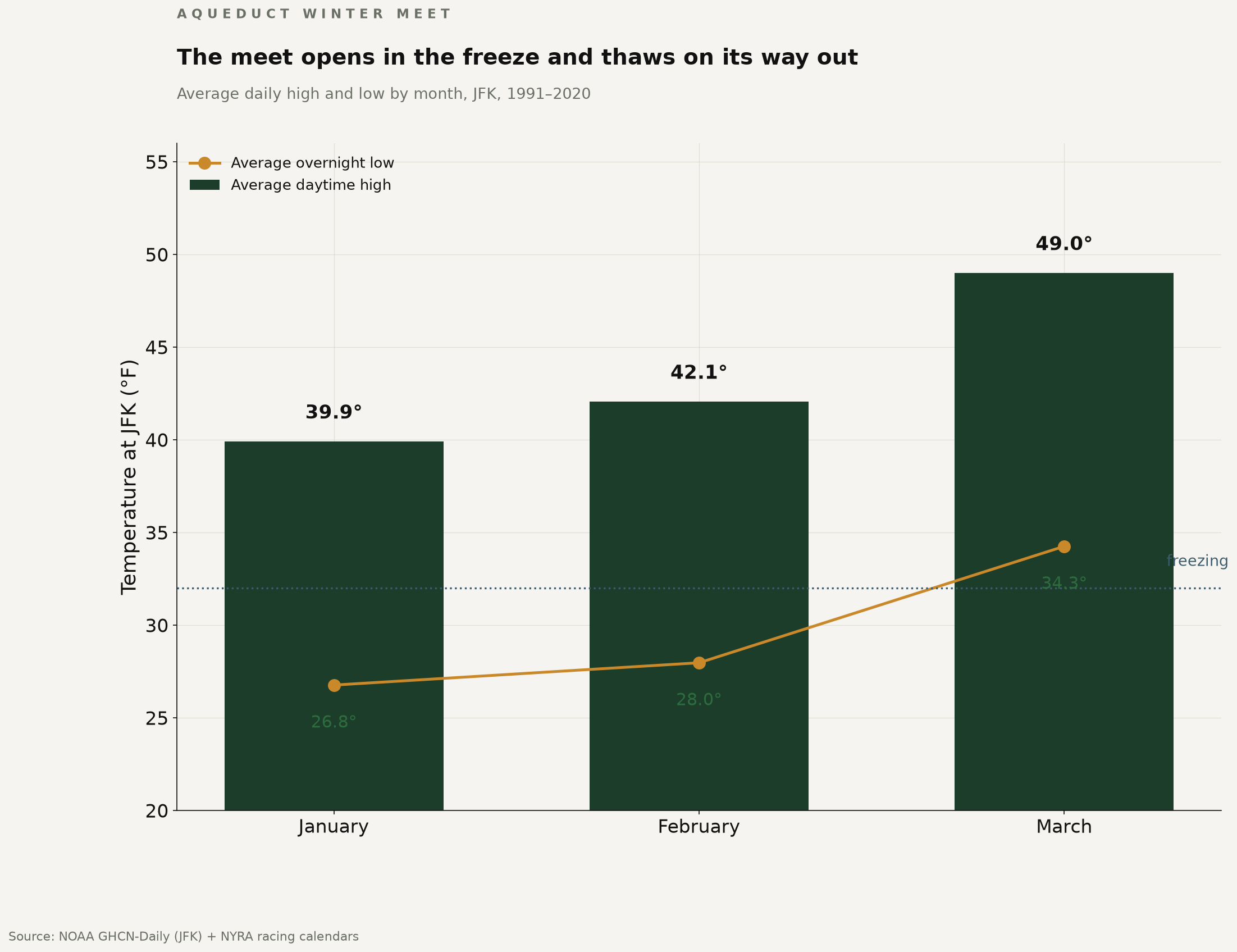
The winter meet did not warm evenly. It opened in the coldest stretch of the New York year and thawed on its way out.
January race days averaged a 39.9°F high - barely 40 degrees. February nudged up to 42.1°F. By March the meet finally cleared the 40s, averaging 49.0°F. The Wood Memorial, the meet's Kentucky Derby prep, ran in early April - when the weather had finally begun to cooperate and the Derby trail reached its last preps.
How often it was genuinely cold
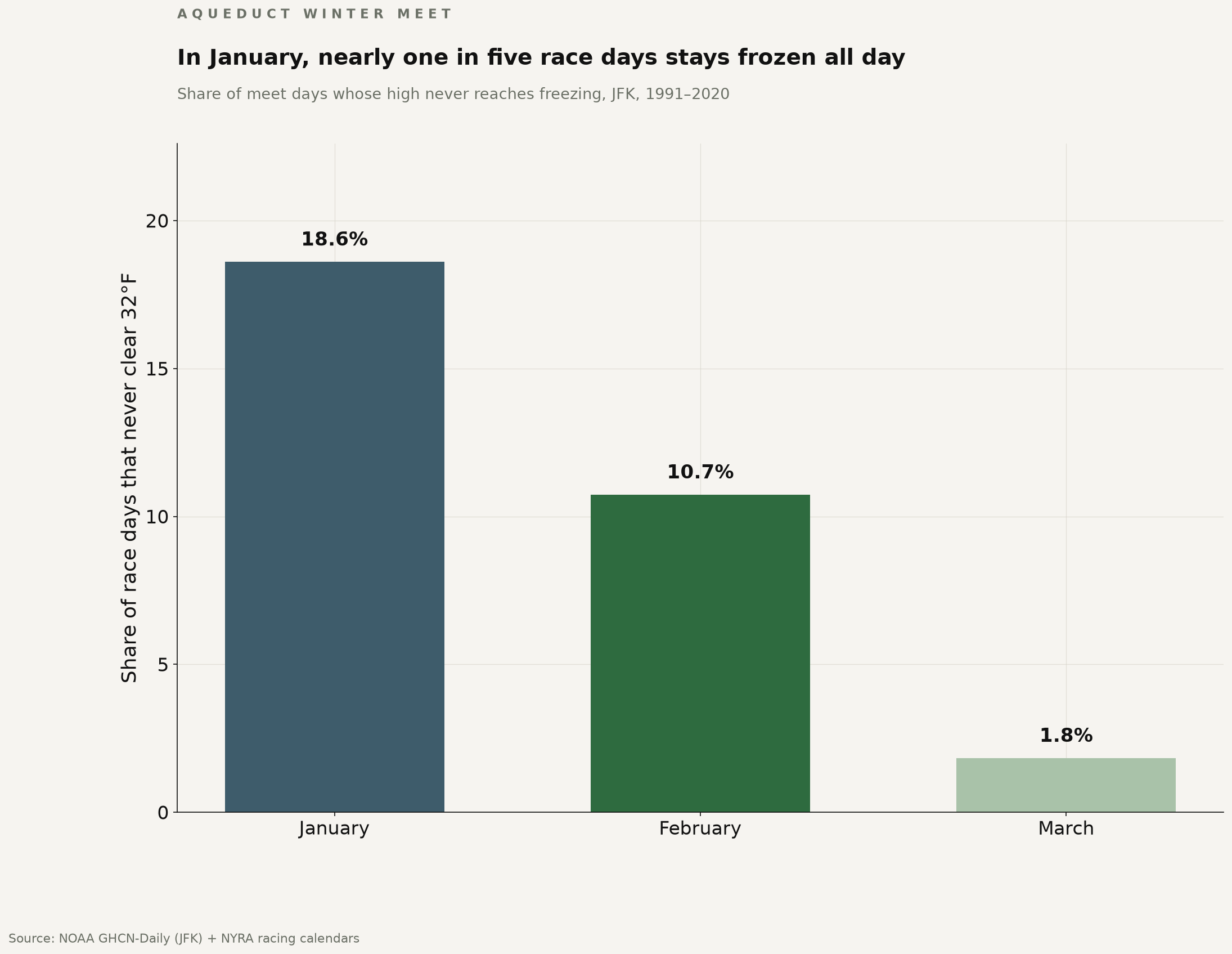
A 43-degree average hid the cold tail. The interesting question is not the mean - it is how often the meet raced in conditions the other two tracks would never accept.
Across the winter window, three in five race days dipped to freezing or below at some point during the day. One in ten never got above freezing in daylight. In January alone, nearly one in five race days stayed below 32°F from dawn to dusk. These were not flukes. They were the median experience of a winter card at the Big A.
When New York racing wanted to keep going through the freeze, the Big A was the only door open.
The only game in the cold
Here is what made the temperature remarkable: nobody else was racing.
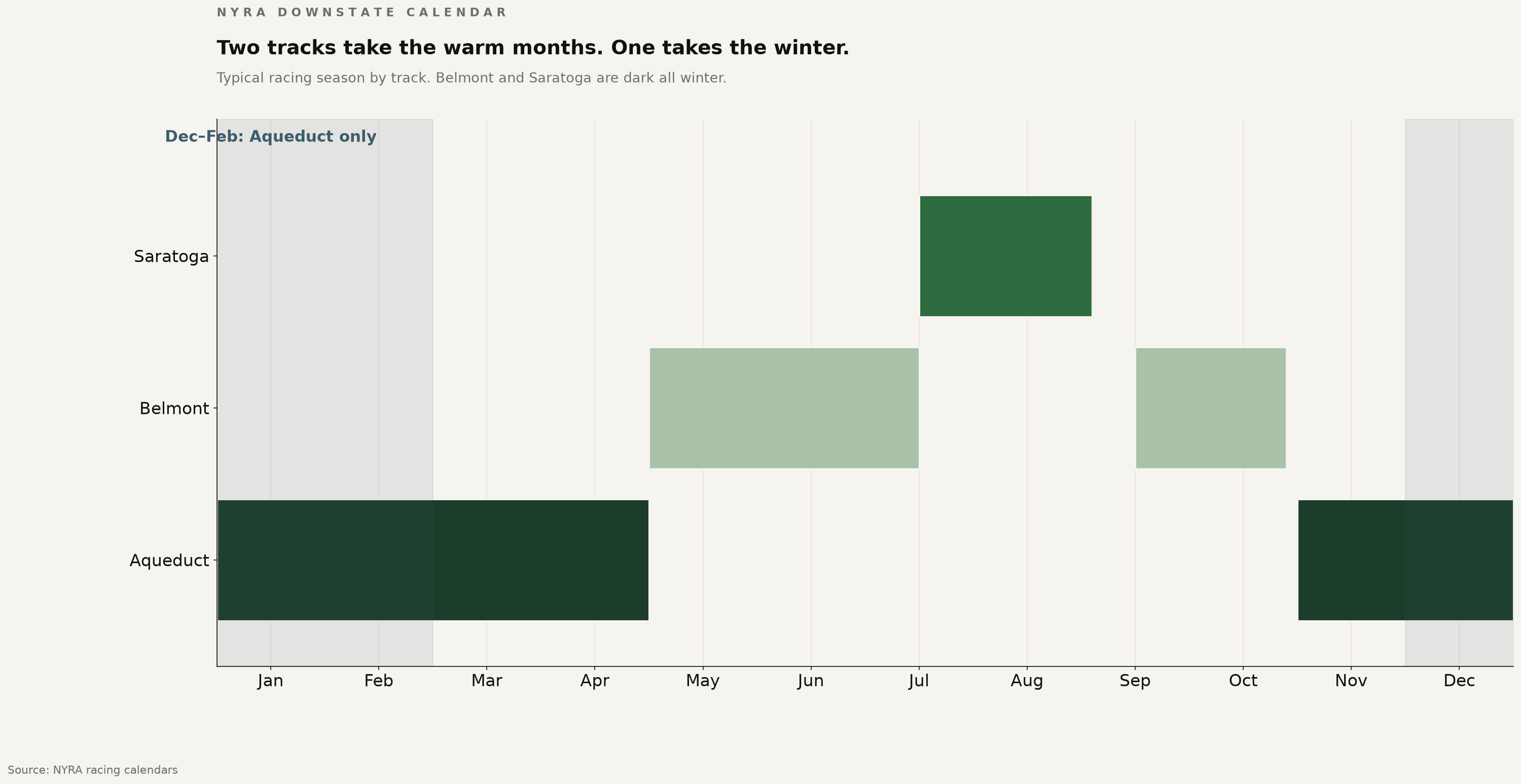
Saratoga was a summer meet - it opened in mid-July and closed on Labor Day, and was dark the other ten months. Belmont Park historically ran spring and fall and shut for the winter entirely. When Aqueduct winterized its one-mile inner track in the 1970s, it did not just join New York winter racing - it became the whole of it. From then on, every downstate Thoroughbred card run between December and February - 100% of them - took place at the Big A. When New York racing wanted to keep going through the freeze, it was the only door open.
Same circuit, forty degrees apart
The same organization, the same horsemen, and the same betting public also showed up at Saratoga in August. The contrast in conditions was almost hard to believe.
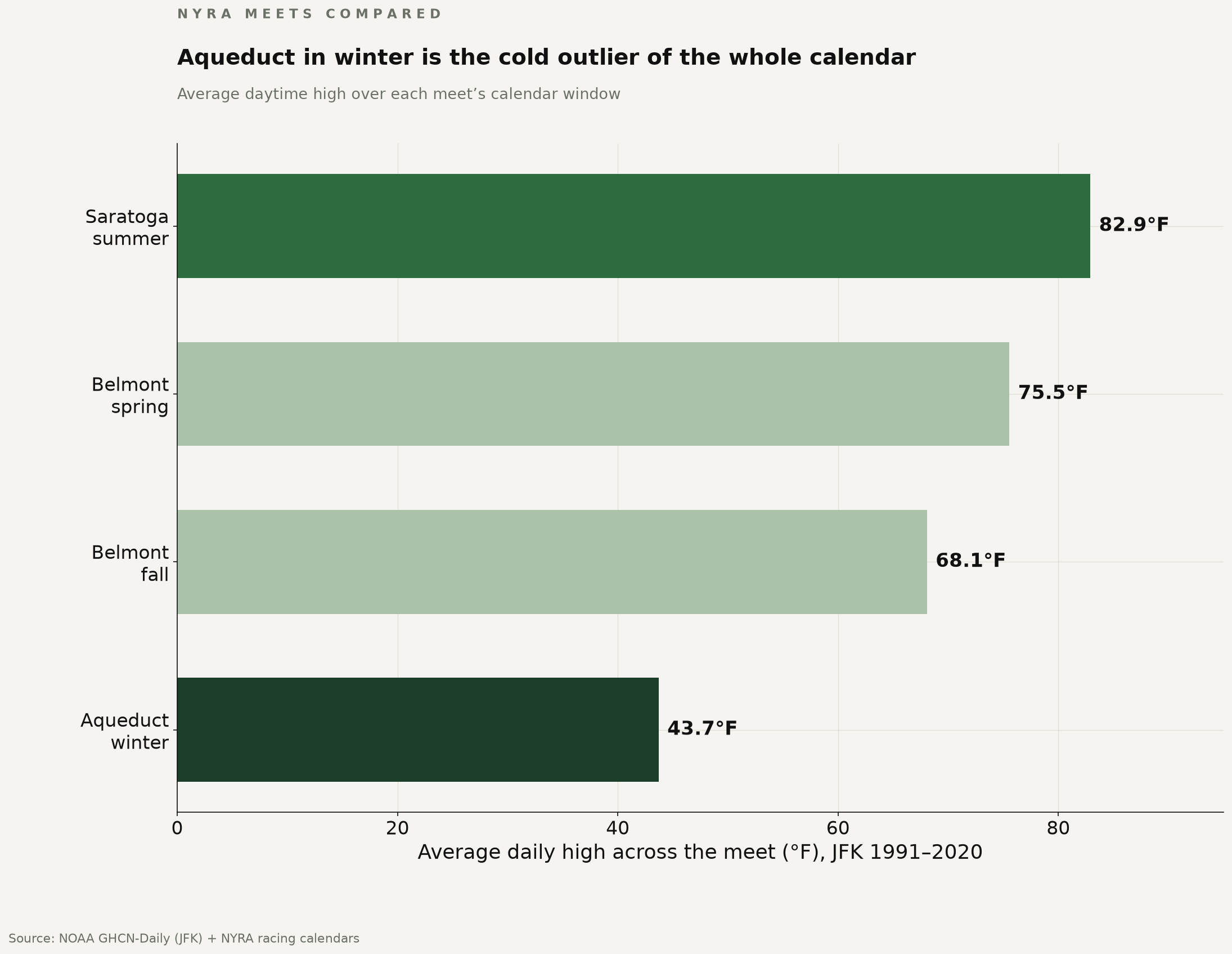
Saratoga's summer meet raced at an average high of 82.9°F. Aqueduct's winter meet raced at 43.7°F. That is a 39-degree swing inside a single racing year, on a single circuit. Belmont's spring meet sat at 75.5°F, its fall meet at 68.1°F. Aqueduct in winter was the cold outlier of the entire NYRA calendar, by a margin no other meet came close to.
The extremes, and the slow thaw
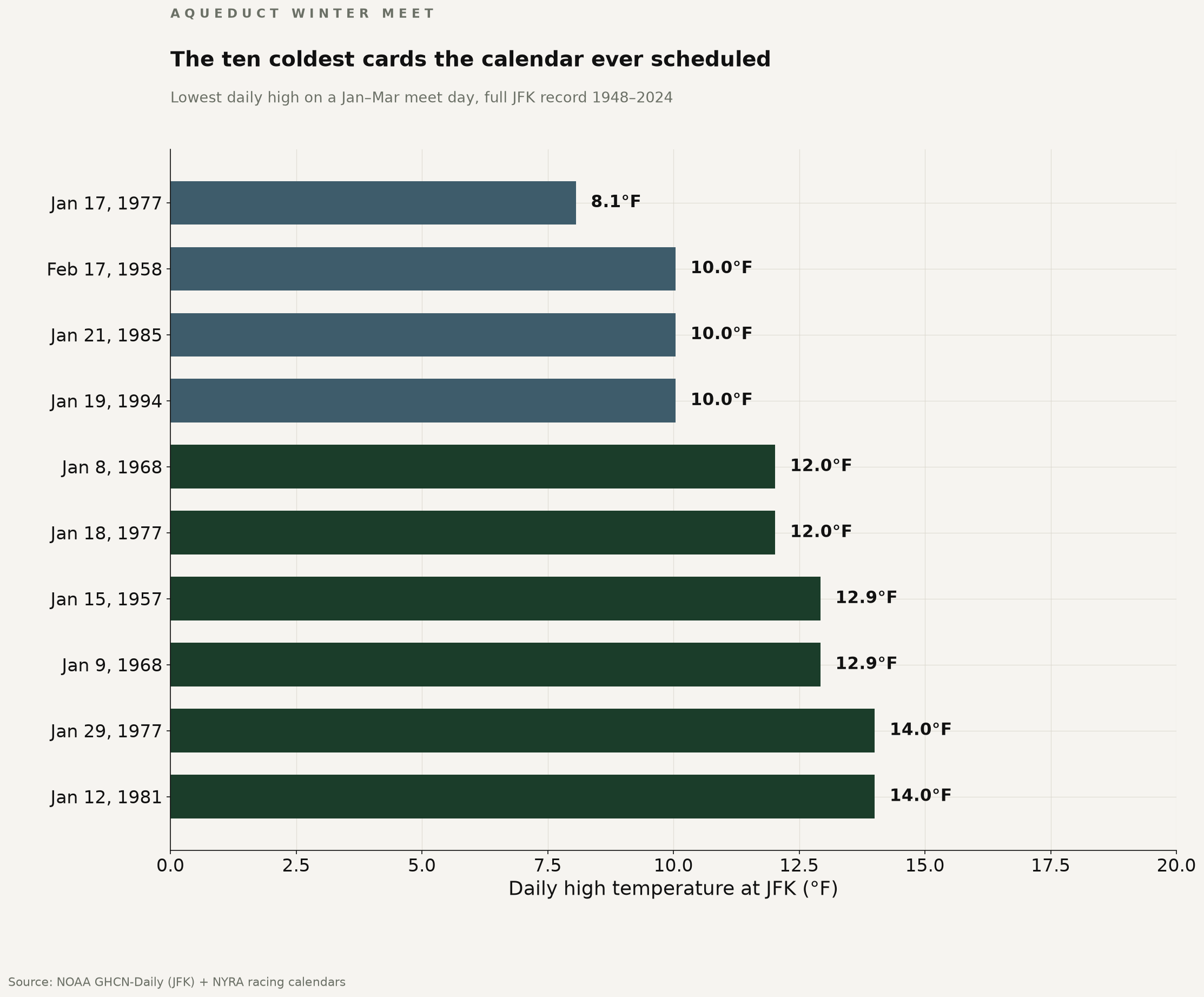
The averages were cold. The extremes were colder. The single coldest race-calendar day in the JFK record is January 17, 1977, when the high reached 8°F and the overnight low fell below zero. All ten of the coldest winter-meet days on record came before 1995.
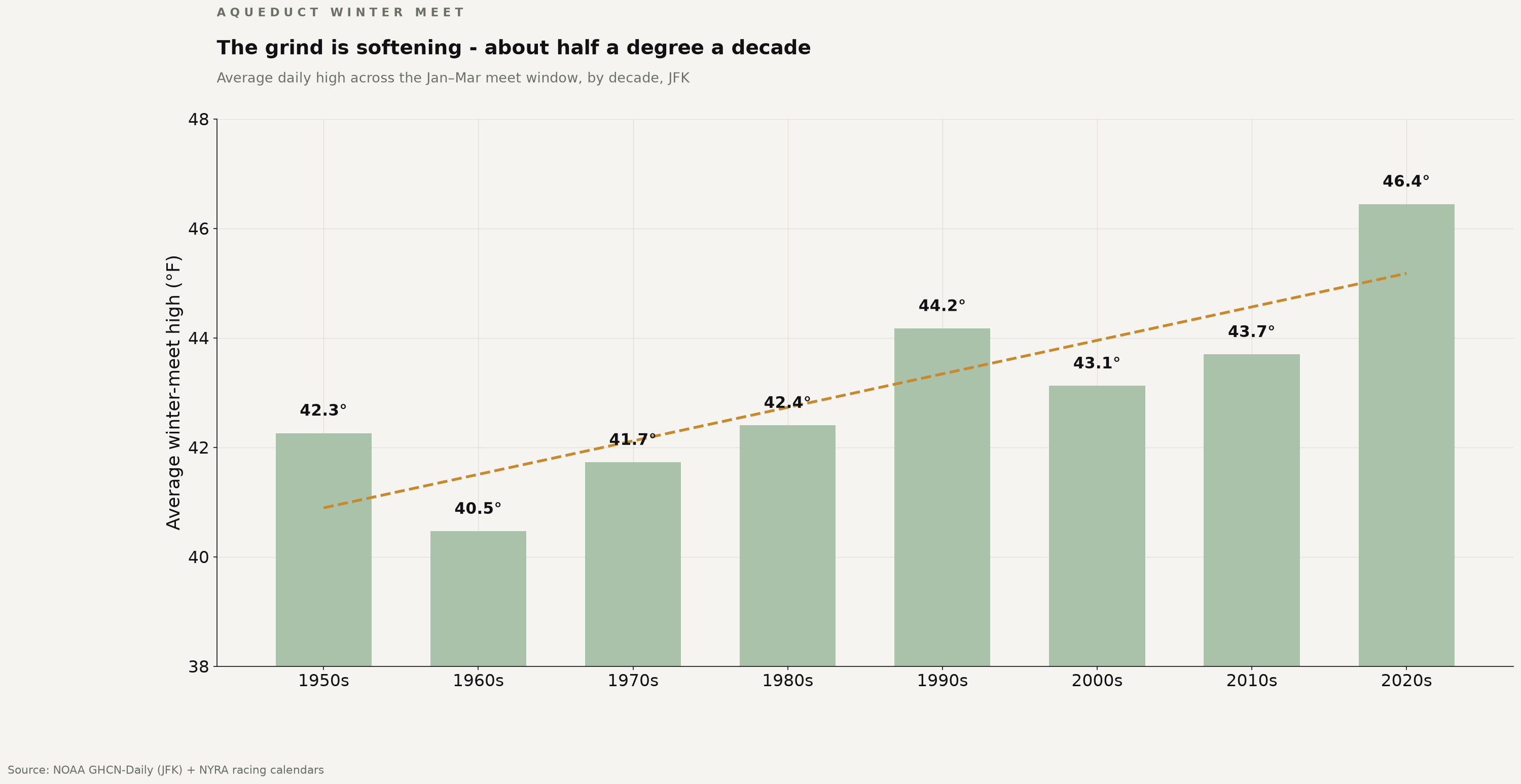
That last detail was not an accident. The winter meet was, measurably, getting milder. The window's average high climbed from 40.5°F in the 1960s to 43.7°F in the 2010s - about half a degree per decade. The grind was softening, slowly. But the reputation was earned in the era the numbers describe: when the Big A really was 8 degrees and wind off Jamaica Bay.
It always got January
A racing calendar is a neutral document. It lists dates and tracks and post times. It does not tell you that one of those tracks drew the short straw.
But the data does. For a quarter of every year, the entire downstate New York racing operation rested on one weather-beaten oval in Queens, racing at an average high in the low 40s, in front of whatever crowd was willing to stand in it. Belmont got the Belmont Stakes and the June sun. Saratoga got August and the Travers and the postcard. Aqueduct got January.
Every sport has its glamour venues. Every sport also has the place that keeps the lights on while the glamour venues sleep. For New York racing, that was the Big A.
On June 28, 2026, after 132 years, Aqueduct ran its last race. The job moves east, to Long Island: a rebuilt, winterized Belmont Park reopens in September 2026 and takes the cold months the Big A carried alone. Someone still has to race in the freeze. For 132 winters, it was Aqueduct.
It always got January. That was the job.